Tattoo Cover-Ups in Sarasota Florida
Tattoo cover-ups in Sarasota Florida offer an opportunity to transform an unwanted, faded, or outdated tattoo into a new design that better reflects your personality. At Hello Tattoo Parlor, you can explore creative cover-up ideas that work with your existing tattoo’s size, placement, and ink colors. Whether you want to replace an old name, redesign a symbol, or turn a tattoo you no longer connect with into meaningful artwork, thoughtful planning is the first step toward a result you can feel confident about.
Transform Old Ink with Tattoo Cover-Ups in Sarasota Florida
Tattoos can carry memories, but personal tastes and life experiences change over time. A design that once felt right may no longer represent who you are today. Tattoo cover-ups provide a way to rework existing ink with a fresh design rather than leaving the original tattoo as it is.
A successful cover-up requires more than placing a new image over an old one. The artist must consider the original tattoo’s darkness, linework, colors, size, and position on the body. These details help determine which new designs can provide suitable coverage while creating a balanced appearance.
Depending on the existing tattoo, potential cover-up ideas may include floral compositions, animals, ornamental patterns, blackwork, traditional designs, or detailed black-and-gray artwork. Each option offers different ways to incorporate darker areas, texture, and visual elements that help disguise the original ink.
At Hello Tattoo Parlor, discussing your preferences and the tattoo you want to cover helps establish realistic design options. Bringing reference images and explaining what you like or dislike about your current tattoo makes the planning process more productive.
Why Choose Hello Tattoo Parlor for Tattoo Cover-Ups in Sarasota Florida?
Choosing a new tattoo design is exciting, but a cover-up also involves solving a specific artistic challenge. The new artwork must work with the existing ink rather than simply sit on top of it. A thoughtful approach helps create a design that looks intentional and suits your preferred style.
Personalized Cover-Up Concepts
Every existing tattoo is different. Some designs may be relatively easy to incorporate into new artwork, while others require more extensive coverage. Sharing your goals helps guide the conversation toward suitable options, whether you prefer a nature-inspired design, bold traditional artwork, or a more detailed composition.
Designs That Work with Existing Ink
The darkest parts of an old tattoo often influence where shading and stronger visual elements need to appear in the new design. A cover-up may also need to be larger than the original tattoo to provide enough room for effective coverage. Being open to adjustments in size, placement, and style can expand your options.
A Fresh Direction for Your Tattoo
A cover-up does not have to look like a repair. With the right concept, the existing tattoo can become the starting point for something visually different. Your new artwork can reflect your current interests, personal milestones, or creative preferences while helping you feel more comfortable with the tattoo you wear.
Why the New Design Almost Always Ends Up Larger
This deserves its own section because it is the single most common surprise for cover-up clients.
The old ink has to be absorbed, not hidden. A cover-up that is the same size as the original is usually not possible, because there is not enough room in the original footprint to build the dark structure that hides the old ink. The new design needs to extend beyond the old tattoo’s boundaries.
How much larger depends on the existing tattoo. A light, faded tattoo with simple linework might be coverable at 1.5× the original size. A dark, saturated tattoo with dense colors might need 3× or more. The consultation is where the artist gives you a realistic estimate.
Laser fading is what changes this equation. If the size requirement is a problem because of where the tattoo sits—a wrist, an ankle, a small area—laser fading can reduce how much dark structure the new design needs, which reduces how much larger it has to be.
4. When Laser Fading Is Worth It
Laser fading is not a last resort. It is the option that expands what is possible. For a lot of cover-ups, one to three laser sessions is the difference between “your idea is not achievable” and “your idea is now achievable.”
When laser fading helps most: when the existing tattoo has green or red in it, when it is extremely dark or densely packed, when it is in a placement with limited room to expand, or when the new design you want is smaller or lighter than what the cover-up would otherwise require.
When it is not necessary: when the existing tattoo is light, faded, or mostly black linework, and when the placement has room to expand the new design around it.
What it involves: a professional laser clinic, typically three to six sessions spaced six to eight weeks apart, that lightens the old ink enough to give the cover-up artist more flexibility. It is not a full removal—it is a partial fading, and the goal is to lighten, not to erase. It is also a multi-month timeline, which is worth planning around.
The consultation is where you find out whether laser fading would meaningfully expand your options. An honest artist will tell you if it would, and will tell you if it would not.
5. What a Cover-Up Consultation Covers
Cover-ups are the one category where the consultation is genuinely decisive. The artist has to see the existing tattoo in person—not from a photo—to assess the ink density, the color, the linework, and the placement. Here is what a cover-up consultation covers.
An in-person assessment of the existing tattoo. Photos help, but they cannot show ink density, how the ink has settled, or how the skin has healed. Bring the tattoo, not just a photo of it.
An honest assessment of what is possible. The artist will tell you what designs can work with your existing ink, and what designs cannot. If your idea is not achievable, an honest artist will say so rather than take a deposit and hope for the best.
A discussion of size and placement. The new design will almost certainly be larger than the original. The consultation is where you settle on how much larger and where it will sit.
A discussion of laser fading. If laser fading would meaningfully expand the options, the artist will tell you. If it would not, they will tell you that too.
A session estimate and pricing. Cover-ups are typically more time-intensive than a fresh tattoo of the same size. The artist will give a realistic session count.
6. Cover-Up Designs That Work
The best cover-up design depends on your existing tattoo, not on a trend. Here are the categories that tend to work well, and why.
Floral designs. Petals, leaves, and shaded centers are the most popular cover-up category because they offer natural places to absorb old lines and dark areas. A large floral composition can incorporate old outlines as stems, leaf edges, or petal boundaries.
Animal artwork. Fur, feathers, and textured shading offer a lot of dark structure to work with, which makes animals a natural fit for covering old ink. A large animal portrait—a lion, a wolf, a tiger, a bird—can absorb old lines into the texture of the fur or feathers.
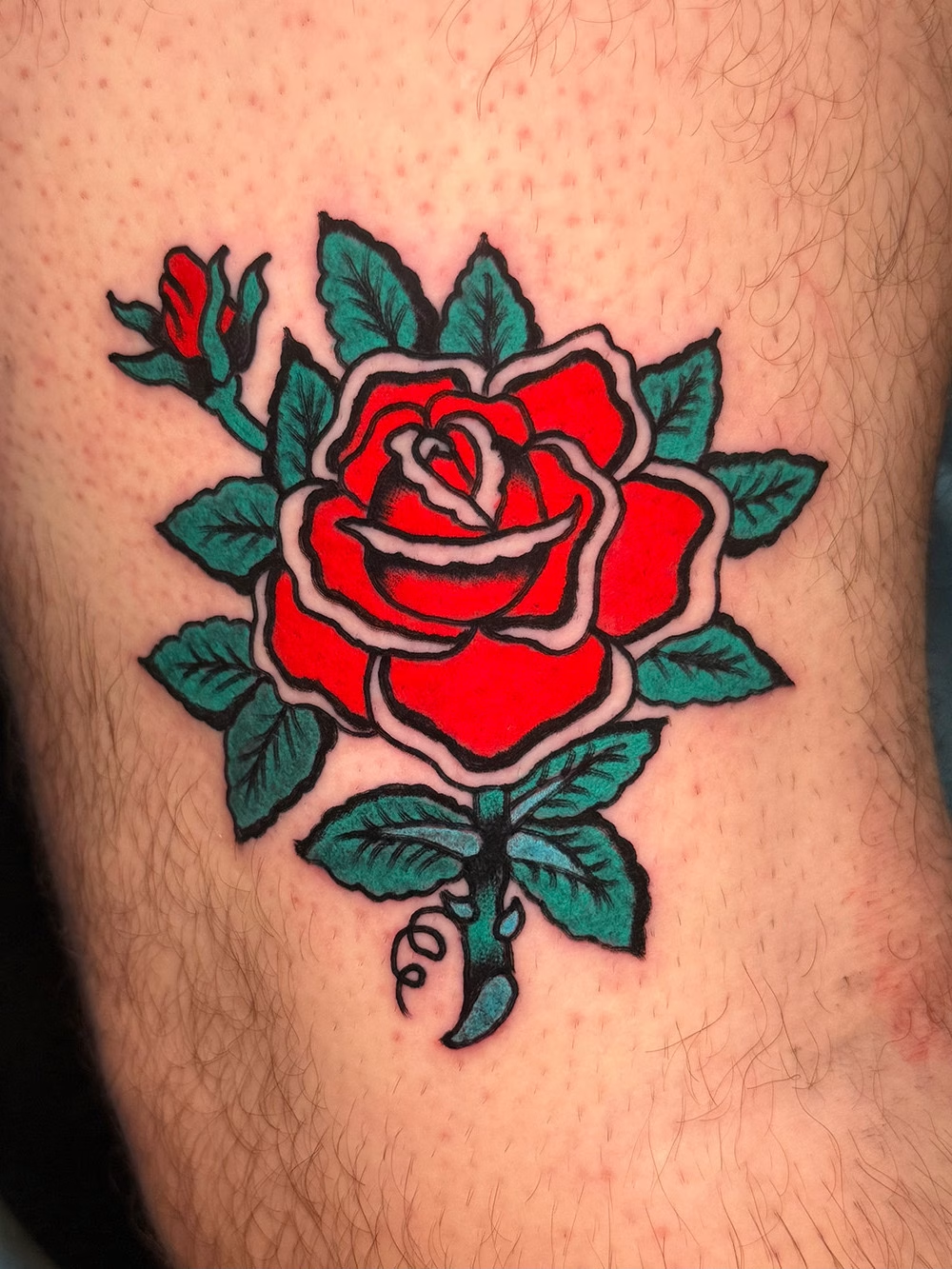
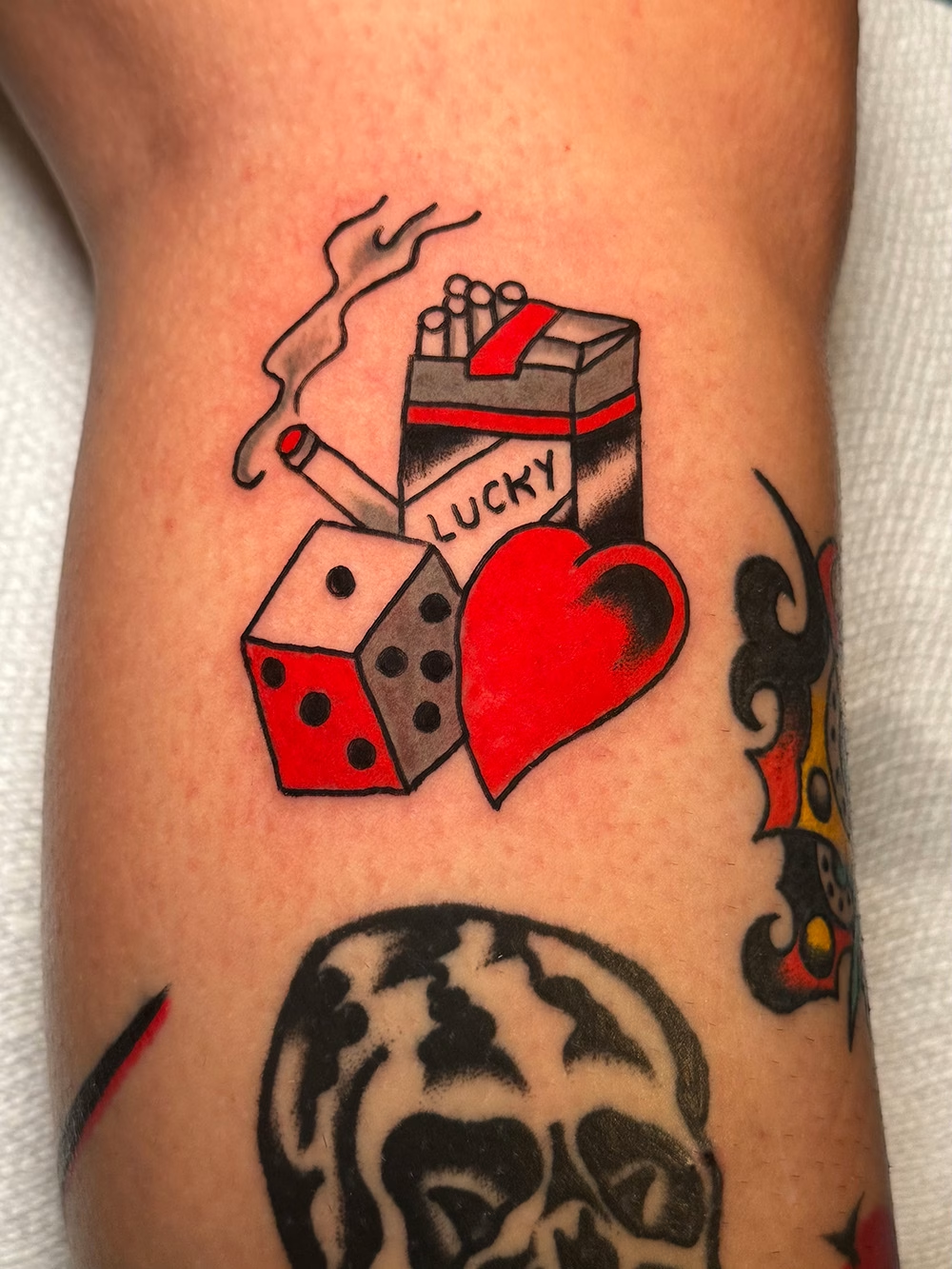
Traditional designs. Bold outlines and strong colors are a good fit for cover-ups because they are built to be dark and structured. A traditional rose, a traditional eagle, or a traditional snake can absorb a surprising amount of old ink.
Blackwork and ornamental patterns. Dark shapes and heavy contrast are the most direct way to cover old ink, which makes blackwork and ornamental designs a good fit for tattoos that are too dark for lighter designs.
Japanese-inspired work. The bold outlines, dark backgrounds, and structured composition of Japanese work make it a strong cover-up category, provided the existing tattoo’s dark areas can be absorbed into the new composition.
Geometric patterns. Geometric designs can work for some existing tattoos, especially those with regular linework, but they offer less flexibility than organic designs.
For a deeper look at each of these styles and how they work as cover-ups, the style guides on this site cover the specifics—see the links at the end of this page.
7. The Hardest Cover-Ups: Names, Dates, and Small Lettering
If you want to cover a name, a date, or a short phrase, you are asking for the hardest cover-up challenge. Lettering is dense, dark, and repetitive, which leaves very little room for the new design to absorb it.
What usually works: a larger design with dark structure that can absorb the lettering as part of a texture or pattern. A floral composition, a blackwork piece, or a traditional design can absorb lettering into its dark areas.
What usually does not work: a light design, a small design, or a design that requires open space where the lettering sits. The lettering will show through.
Laser fading is often the most realistic option for lettering. One to three sessions of laser fading can lighten lettering enough to make a wider range of designs possible. That is worth asking about directly.
8. How to Evaluate a Cover-Up Artist
Cover-ups are a distinct technical skill, not just a fresh tattoo with an old one underneath. A few practical ways to evaluate whether an artist is genuinely good at cover-ups:
-
Ask to see healed cover-up work specifically. Fresh cover-ups always look impressive. Healed cover-ups are what you are actually buying. Ask for healed photos—ideally healed for at least a year—of cover-ups in a similar style and placement to yours.
-
Ask how the artist would approach your specific tattoo. A good cover-up artist will look at your existing tattoo and immediately start describing design options. That conversation is the best portfolio review available.
-
Ask about laser fading. If the artist does not mention laser fading as a possible option, ask directly. A good artist will tell you honestly whether it would help.
-
Ask about size expectations. An artist who tells you the new design needs to be larger is being honest. An artist who says your idea can be done at the same size is a shop to walk away from.
-
Confirm artist continuity. If your cover-up will take more than one session, confirm the same artist will handle all of them.
At Hello Tattoo Parlor, our team works across the technical range cover-ups draw on—bold linework and controlled black-and-grey shading. When you book a cover-up consultation, the shop will match you with the artist whose portfolio best fits your specific tattoo.
9. Pricing, Sessions, and Timeline
Cover-ups are typically more time-intensive than a fresh tattoo of the same size, because the design has to be engineered around the existing ink.
-
Small, simple cover-ups: often one session of two to four hours.
-
Medium cover-ups: typically one long session or two sessions, spaced four to six weeks apart.
-
Large cover-ups: often two to four sessions, spaced four to six weeks apart.
-
Laser fading, if part of the plan: three to six sessions spaced six to eight weeks apart, which adds several months to the timeline.
Hello Tattoo Parlor prices custom work hourly, and a deposit secures the appointment and is applied to the final session. The artist will give a realistic session count during the consultation, not before.
10. Hygiene, Safety, and What to Look For
Hygiene is not a marketing point—it is the baseline. Every session at a serious shop should involve:
-
Single-use needles and single-use ink caps
-
Sterile technique and a clean station for every client
-
Gloves changed between steps
-
Proper disposal of sharps and contaminated materials
-
A clean, well-lit, well-ventilated workspace
Ask about hygiene practices directly during the consultation. A shop that is happy to explain them is the one you want. A shop that is vague is not.
11. Preparing for a Cover-Up Session
A few practical steps make a cover-up session smoother:
-
Eat a real meal beforehand. Cover-up sessions run longer than fresh tattoo sessions of the same size, and low blood sugar is the most common reason clients need to stop early.
-
Hydrate across the day before.
-
Wear clothing that exposes the placement area.
-
Bring your best reference images, not a screenshot of a screenshot.
-
Avoid alcohol before your appointment.
-
Tell the artist about relevant skin concerns or medications that may affect tattooing.
-
Plan a light day after. A cover-up session is tiring.
If the existing tattoo is irritated or has not fully healed, discuss this before proceeding. And if your plan involves laser fading, plan the laser sessions and the cover-up sessions together rather than one at a time.
12. Healing and Aftercare
Cover-up tattoos heal in the same two-to-three-week window as any other tattoo. Keep the area clean, avoid picking or scratching, and protect it from direct sun while it heals. No swimming during healing—no pools, no Gulf, no bay.
Do not judge the finished appearance until the skin has fully settled. Cover-ups can look darker or denser during healing than they will once settled, because the old ink is still there under the new design. Give it a few weeks before you decide how you feel about it.
Sunscreen on exposed placements after healing is the single most effective long-term preservation step, and it matters more for a cover-up than for a fresh piece of the same size, because a cover-up has less contrast to spare.
13. Frequently Asked Questions
Can any tattoo be covered up?
Most can, but not every idea is achievable. The limiting factors are the darkness of the existing ink, the colors used (green and red are the hardest), the size and placement of the original tattoo, and how much room there is to expand the new design.
Why does the new tattoo have to be larger?
Because the new design needs enough dark structure to absorb the old ink. A cover-up that is the same size as the original is usually not possible. A cover-up that is two or three times the size often is.
Can I cover black ink with a lighter color?
No. Dark ink can only be covered by darker ink. This is the single most important principle of cover-ups, and it shapes every design decision.
Is laser fading worth it?
Sometimes, and it is the option that expands what is possible. If your existing tattoo has green or red in it, is extremely dark, or is in a placement with limited room to expand, one to three laser sessions can meaningfully widen your options.
How long does a cover-up take?
Small cover-ups are often one session of two to four hours. Larger cover-ups span two to four sessions, spaced four to six weeks apart. If laser fading is part of the plan, that adds several months to the timeline.
What should I bring to a cover-up consultation?
The existing tattoo itself—not just a photo—plus reference images of the style you want, and an honest sense of how much you want to change.
Can I cover a name or a date?
Sometimes, and it is one of the harder cover-up challenges because lettering is dense and dark. The artist will assess whether the lettering can be absorbed into a larger design or concealed by a new composition. Laser fading is often the most realistic option for lettering.
Which artist should I book for a cover-up?
Chase Fenner, Derek Olsen, Jared Allen, and Lane all work across the technical range cover-ups draw on, particularly bold linework and black-and-grey shading. The shop will match you with the artist whose portfolio best fits your specific cover-up when you book.
How much do cover-ups cost?
Cover-ups are typically more time-intensive than a fresh tattoo of the same size. Pricing depends on size, complexity, placement, and session time. Contact the shop for an estimate based on your specific tattoo.
Will the same artist handle every session of a multi-session cover-up?
That is something to confirm in the consultation. For a multi-session cover-up, the same artist across all sessions keeps the design consistent.
Where can I get a cover-up in Sarasota?
Hello Tattoo Parlor is at 530 S Orange Ave in downtown Sarasota. Call the shop or use the contact form to book a consultation.
Same Service We Provide In Your Nearby Area
Explore tattoo cover-up services in nearby communities to find a convenient location for your next tattoo.
Other Services We Provide
Explore additional tattoo services from Hello Tattoo Parlor to find a style that suits your preferences.
Come See What Hello Tattoo Parlor Feels Like.
The best way to understand the parlor is to step inside. Come meet us, see the work, and start a conversation about what you want to create.