Tattoo Cover-Ups in Siesta Key Florida
Siesta Key has one of the most recognizable beaches in the country, a dense walkable Village, two bridges onto the island, and a population that changes completely between February and August. All of that shapes how a cover-up should be planned here. A cover-up is not a style—it is a problem to solve, and the existing tattoo is the starting condition. The assessment has to happen in person, the new design is almost always larger than the old one, and on a beach island the long-term fading question matters more than it does anywhere else. This page covers what makes a cover-up possible, what makes it difficult, why the new design almost always ends up larger, when laser fading is worth considering, and what a cover-up consultation actually covers. For a full explanation of the category, see our complete guide to tattoo cover-ups in Sarasota.
Transform Old Ink with Tattoo Cover-Ups in Siesta Key Florida
Tattoos can carry memories, but personal tastes and life experiences change over time. A design that once felt right may no longer represent who you are today. Tattoo cover-ups provide a way to rework existing ink with a fresh design rather than leaving the original tattoo as it is.
A successful cover-up requires more than placing a new image over an old one. The artist must consider the original tattoo’s darkness, linework, colors, size, and position on the body. These details help determine which new designs can provide suitable coverage while creating a balanced appearance.
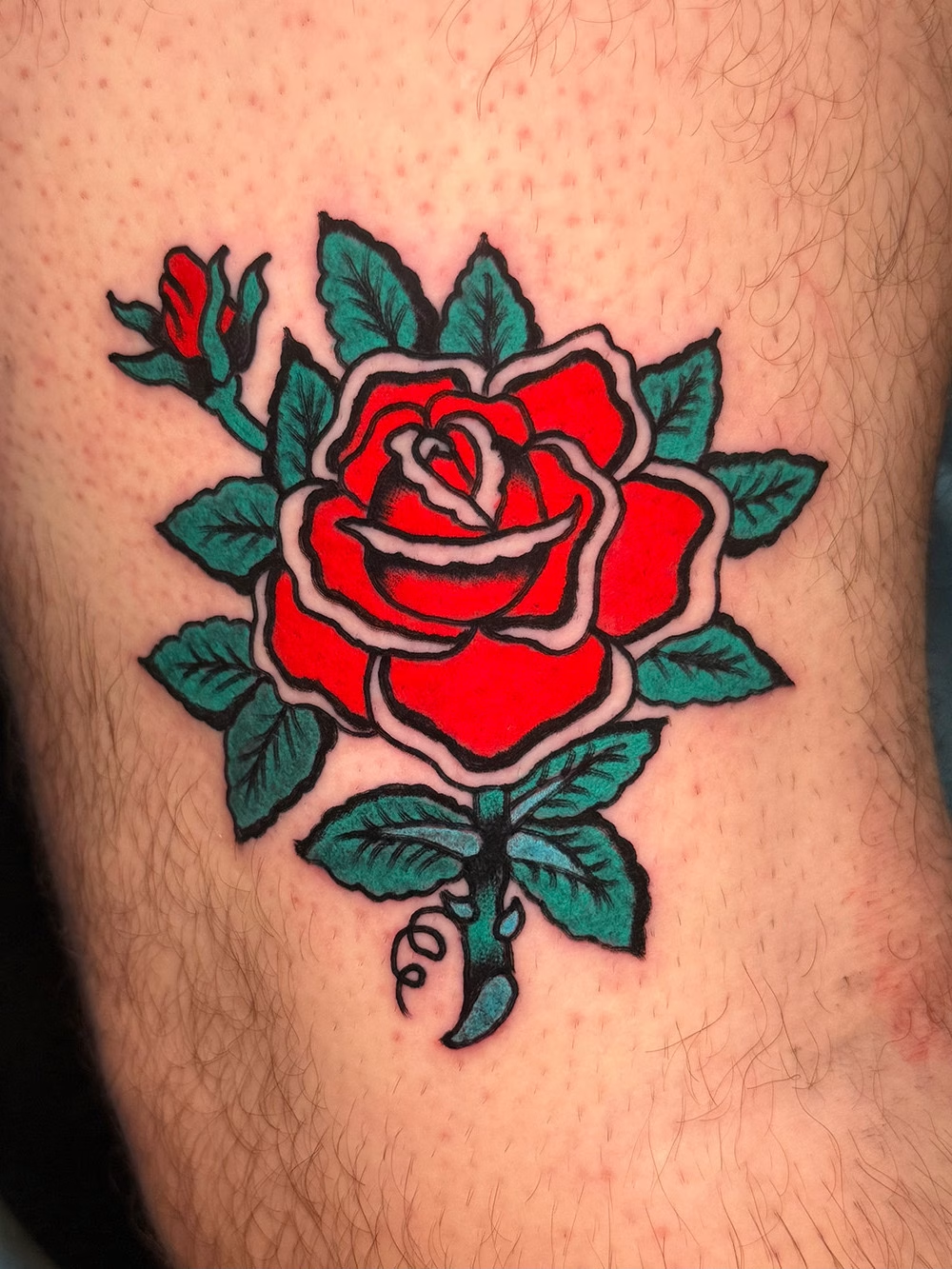
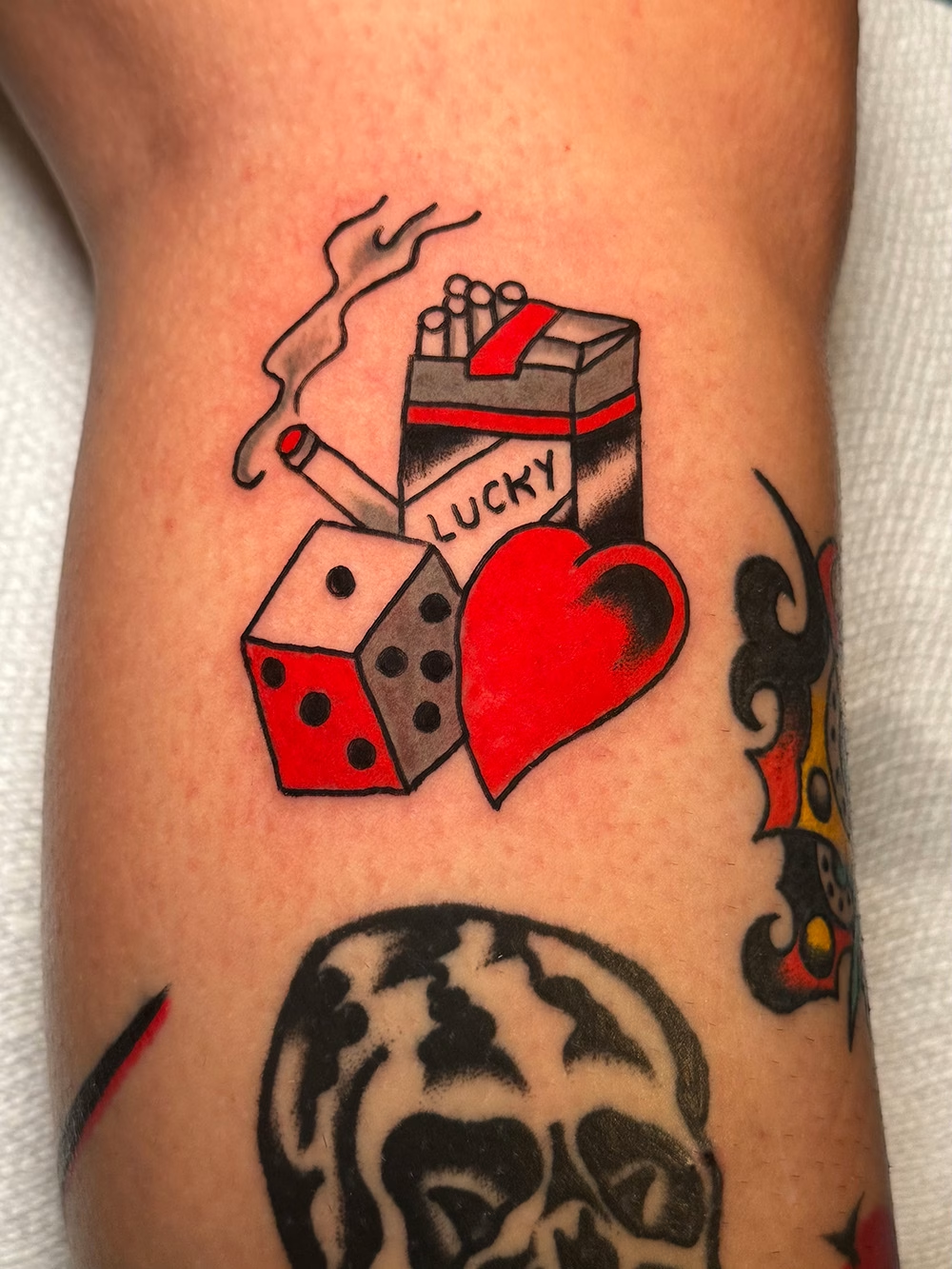
Depending on the existing tattoo, potential cover-up ideas may include floral compositions, animals, ornamental patterns, blackwork, traditional designs, or detailed black-and-gray artwork. Each option offers different ways to incorporate darker areas, texture, and visual elements that help disguise the original ink.
At Hello Tattoo Parlor, discussing your preferences and the tattoo you want to cover helps establish realistic design options. Bringing reference images and explaining what you like or dislike about your current tattoo makes the planning process more productive.
Why Choose Hello Tattoo Parlor for Tattoo Cover-Ups in Siesta Key Florida?
Choosing a new tattoo design is exciting, but a cover-up also involves solving a specific artistic challenge. The new artwork must work with the existing ink rather than simply sit on top of it. A thoughtful approach helps create a design that looks intentional and suits your preferred style.
Personalized Cover-Up Concepts
Every existing tattoo is different. Some designs may be relatively easy to incorporate into new artwork, while others require more extensive coverage. Sharing your goals helps guide the conversation toward suitable options, whether you prefer a nature-inspired design, bold traditional artwork, or a more detailed composition.
Designs That Work with Existing Ink
The darkest parts of an old tattoo often influence where shading and stronger visual elements need to appear in the new design. A cover-up may also need to be larger than the original tattoo to provide enough room for effective coverage. Being open to adjustments in size, placement, and style can expand your options.
A Fresh Direction for Your Tattoo
A cover-up does not have to look like a repair. With the right concept, the existing tattoo can become the starting point for something visually different. Your new artwork can reflect your current interests, personal milestones, or creative preferences while helping you feel more comfortable with the tattoo you wear.
The Beach-Healing Reality: A Siesta-Specific Consideration
Siesta Key is a beach destination, and that matters for a cover-up in a way it does not for most clients in this cluster. If you are getting a cover-up here, ask the artist about the healing rules up front.
No swimming during surface healing. No Gulf, no pool, no bay, no hot tub. Surface healing takes two to three weeks. During that window, the tattoo should be kept out of water entirely. This is not optional, and it is the single most common way a beach-area cover-up heals badly.
No direct sun on the healing tattoo. Siesta Beach is one of the sunniest places in Florida, and direct sun on a healing tattoo is the fastest way to lose crispness.
Sun exposure fades a cover-up faster than a fresh piece in a less exposed placement. This is worth understanding before you commit. Cover-ups have less contrast to spare than a fresh piece, because the old ink is still there under the new design. Sun damage shows up faster on a cover-up than on a fresh tattoo of the same size, so placement matters—and sunscreen after healing is not optional.
Placement decisions should account for this. A cover-up on a forearm or calf will see more sun than one on a thigh, upper arm, or shoulder blade. If you want a cover-up that stays crisp for years on an island where sun is daily life, placement is a bigger factor than most people expect.
If you are a visitor with a beach trip planned, tell the artist your dates during the consultation. The answer will depend on how much healing window you have between the session and your beach days.
How Cover-Ups Actually Work
Most people assume a cover-up means putting a new image over an old one. That is not quite right. A cover-up means building a new design whose dark areas land exactly where the old tattoo’s dark areas are, so the old ink becomes part of the new structure. Understanding that changes what you should expect.
Dark ink can only be covered by darker ink. This is the single most important principle. Tattoo ink sits under the skin and is visible through it. To hide an old dark line, the new design has to place an equally dark or darker area over it. You cannot cover black with light shading.
Color matters enormously. Black is the easiest color to cover. Green and red are the hardest—green in particular is notoriously difficult. If your existing tattoo has green in it, the artist will need to plan around it, and the honest answer may involve laser fading first.
Linework has to be absorbed into new structure. Old outlines cannot be hidden under light shading. They have to be incorporated into the new design’s structure—as the stem of a flower, the edge of a leaf, the outline of an animal’s ear. A good cover-up artist will look at your existing lines and see the new design inside them.
The new design almost always ends up 2–3× the size of the original. To build enough dark structure around the old tattoo, the new piece usually needs significantly more space than the original. A cover-up that is the same size as the original is usually not possible.
Placement flexibility expands the options. A cover-up on a forearm has more room to expand than one on a wrist or an ankle.
When Laser Fading Is Worth It
Laser fading is not a last resort. It is the option that expands what is possible. For a lot of cover-ups, one to three laser sessions is the difference between “your idea is not achievable” and “your idea is now achievable.”
When laser fading helps most: when the existing tattoo has green or red in it, when it is extremely dark or densely packed, when it is in a placement with limited room to expand, or when the new design you want is smaller or lighter than what the cover-up would otherwise require.
When it is not necessary: when the existing tattoo is light, faded, or mostly black linework, and when the placement has room to expand the new design around it.
What it involves: a professional laser clinic, typically three to six sessions spaced six to eight weeks apart, that lightens the old ink enough to give the cover-up artist more flexibility. It is not a full removal—it is a partial fading, and the goal is to lighten, not to erase.
The consultation is where you find out whether laser fading would meaningfully expand your options. An honest artist will tell you if it would, and will tell you if it would not.
What a Cover-Up Consultation Covers
Cover-ups are the one category where the consultation is genuinely decisive. The artist has to see the existing tattoo in person—not from a photo—to assess the ink density, the color, the linework, and the placement. Here is what a cover-up consultation covers.
An in-person assessment of the existing tattoo. Photos help, but they cannot show ink density, how the ink has settled, or how the skin has healed. Bring the tattoo, not just a photo of it.
An honest assessment of what is possible. The artist will tell you what designs can work with your existing ink, and what designs cannot. If your idea is not achievable, an honest artist will say so rather than take a deposit and hope for the best.
A discussion of size and placement. The new design will almost certainly be larger than the original. The consultation is where you settle on how much larger and where it will sit.
A discussion of laser fading. If laser fading would meaningfully expand the options, the artist will tell you. If it would not, they will tell you that too.
A session estimate and pricing. Cover-ups are typically more time-intensive than a fresh tattoo of the same size. The artist will give a realistic session count.
Cover-Up Designs That Work
The best cover-up design depends on your existing tattoo, not on a trend. Here are the categories that tend to work well, and why.
Floral designs. Petals, leaves, and shaded centers are the most popular cover-up category because they offer natural places to absorb old lines and dark areas.
Animal artwork. Fur, feathers, and textured shading offer a lot of dark structure to work with, which makes animals a natural fit for covering old ink.
Traditional designs. Bold outlines and strong colors are a good fit for cover-ups because they are built to be dark and structured.
Blackwork and ornamental patterns. Dark shapes and heavy contrast are the most direct way to cover old ink, which makes blackwork and ornamental designs a good fit for tattoos that are too dark for lighter designs.
Japanese-inspired work. The bold outlines, dark backgrounds, and structured composition of Japanese work make it a strong cover-up category, provided the existing tattoo’s dark areas can be absorbed into the new composition.
Geometric patterns. Geometric designs can work for some existing tattoos, especially those with regular linework, but they offer less flexibility than organic designs.
If you want to cover a name, a date, or a small symbol, the artist will assess whether it can be incorporated into a larger design or concealed by a new composition. Covering small lettering is often the hardest cover-up challenge.
Who at Hello Tattoo Parlor Does Cover-Up Work
Hello Tattoo Parlor’s team—Chase Fenner, Derek Olsen, Jared Allen, and Lane—works across traditional, fine line, and black-and-grey tattooing. Cover-ups draw most heavily on bold linework and controlled black-and-grey shading, because the new design has to absorb the old ink into its dark structure.
A few things worth knowing about how to choose an artist for a cover-up:
-
Ask to see healed cover-up work specifically. Fresh cover-ups always look impressive. Healed cover-ups are what you are actually buying. Ask for healed photos—ideally healed for at least a year—of cover-ups in a similar style and placement to yours.
-
Ask how the artist would approach your specific tattoo. A good cover-up artist will look at your existing tattoo and immediately start describing design options. That conversation is the best portfolio review available.
-
Ask about laser fading. If the artist does not mention laser fading as a possible option, ask directly. A good artist will tell you honestly whether it would help.
-
Confirm artist continuity. If your cover-up will take more than one session—and for a seasonal owner, it may—confirm the same artist will handle all of them.
If you are unsure which artist fits your concept, say so when you book. The shop will match you based on your specific tattoo rather than assigning you to whoever has the next open slot.
Preparing for a Cover-Up Session and Healing
A few practical steps make a cover-up session smoother:
-
Eat a real meal beforehand. Cover-up sessions run longer than fresh tattoo sessions of the same size, and low blood sugar is the most common reason clients need to stop early.
-
Hydrate across the day before. Not just the morning of. This matters more in the Florida heat.
-
Wear clothing that exposes the placement area.
-
Bring your best reference images, not a screenshot of a screenshot.
-
Plan the bridge crossing realistically. Both bridges back up during season. Leave buffer time if you are booking during winter months.
-
Plan a light day after. A cover-up session is tiring, and the drive back over the bridge is easier when the rest of the day is quiet.
Healing: cover-up tattoos heal in the same two-to-three-week window as any other tattoo. Keep the area clean, avoid picking or scratching, and protect it from direct sun while it heals. No swimming in the Gulf, the bay, or the pool during surface healing. Do not judge the finished appearance until the skin has fully settled—cover-ups can look darker or denser during healing than they will once settled. Your artist will give you specific instructions, and those should take priority over generic advice you find online.
Frequently Asked Questions from Siesta Key Clients
How far is Hello Tattoo Parlor from Siesta Key?
Roughly fifteen to twenty-five minutes from most of Siesta Key, depending on which bridge you use and where you start. From Siesta Village and the north end, use the Siesta Drive Bridge and follow Siesta Drive to US-41 north. From Crescent Beach, Turtle Beach, and the south end, use the Stickney Point Bridge and go north on US-41.
I am visiting for a week. Can I get a cover-up during my stay?
Usually not, unless the existing tattoo is small, light, and easy to cover. The assessment has to happen in person, the planning takes time, and the sessions are long. An honest artist will tell you straight if your timeline is unrealistic.
I am only on the island for the season. Can I plan a cover-up?
Yes, if you plan around the season. The assessment has to happen in person and the sessions run longer than fresh tattoo sessions of the same size, so ask about availability during your window, whether the artist can complete the cover-up within your stay, and how the healing window fits around your departure. If laser fading is part of the plan, that timeline may span more than one season.
Can any tattoo be covered up?
Most can, but not every idea is achievable. The limiting factors are the darkness of the existing ink, the colors used (green and red are the hardest), the size and placement of the original tattoo, and how much room there is to expand the new design.
Why does the new tattoo have to be larger?
Because the new design needs enough dark structure to absorb the old ink. A cover-up that is the same size as the original is usually not possible. A cover-up that is two or three times the size often is.
Can I cover black ink with a lighter color?
No. Dark ink can only be covered by darker ink.
Is laser fading worth it?
Sometimes, and it is the option that expands what is possible. If your existing tattoo has green or red in it, is extremely dark, or is in a placement with limited room to expand, one to three laser sessions can meaningfully widen your options.
I spend a lot of time at the beach. Does that affect a cover-up?
It affects placement and aftercare more than the cover-up itself. Cover-ups fade faster in sun-exposed placements, so ask the artist how they plan placements with sun exposure in mind—and no swimming and no direct sun during surface healing.
What should I bring to a cover-up consultation?
The existing tattoo itself—not just a photo—plus reference images of the style you want, and an honest sense of how much you want to change.
Which artist should I book for a cover-up?
Chase Fenner, Derek Olsen, Jared Allen, and Lane all work across the technical range cover-ups draw on, particularly bold linework and black-and-grey shading. The shop will match you with the artist whose portfolio best fits your specific cover-up when you book.
How much do cover-ups cost?
Cover-ups are typically more time-intensive than a fresh tattoo of the same size. Pricing depends on size, complexity, placement, and session time. Contact the shop for an estimate based on your specific tattoo.
Can I cover a name or a date?
Sometimes, and it is one of the harder cover-up challenges because lettering is dense and dark. The artist will assess whether the lettering can be absorbed into a larger design or concealed by a new composition.
Where can I get a cover-up near Siesta Key?
Hello Tattoo Parlor is at 530 S Orange Ave in downtown Sarasota, a short bridge-and-causeway drive from the island. Call the shop or use the contact form to book a consultation.
Book a Cover-Up Consultation from Siesta Key
Hello Tattoo Parlor is at 530 S Orange Ave, Sarasota, FL 34236. If you are considering a cover-up, the next step is a consultation—bring the existing tattoo, tell us what you want the new piece to accomplish and what your timeline on the island looks like, and we will tell you honestly whether your idea is achievable, what the design would need to look like, and whether laser fading would expand your options.
For a full explanation of the category, see our complete guide to tattoo cover-ups in Sarasota. If you are considering a specific style for the cover-up, our guides to Japanese, neo-traditional, realism, and small tattoos in Siesta Key cover those separately.
Call the shop or use the contact form to book a consultation.
Same Service We Provide In Your Nearby Area
Explore tattoo cover-up services in nearby communities to find a convenient location for your next tattoo.
Other Services We Provide
Explore additional tattoo services from Hello Tattoo Parlor to find a style that suits your preferences.
Come See What Hello Tattoo Parlor Feels Like.
The best way to understand the parlor is to step inside. Come meet us, see the work, and start a conversation about what you want to create.