
Realism Tattoos in Osprey Florida
Osprey is a small, quiet, low-density community on the mainland side of Little Sarasota Bay, and a lot of the people who live here are outside constantly. They walk and cycle the Legacy Trail, hike Oscar Scherer State Park, paddle the bay, and spend weekends at Historic Spanish Point. That active, outdoor-oriented lifestyle is a genuine factor in planning a realism tattoo—more so than for any other style. Realism lives on subtle shading and contrast, and contrast is the first thing to fade under friction, sun, and the healing complications that come with an active body. Placement decisions that would be cosmetic for a desk-bound client become survival decisions for a cyclist, a trail runner, or a paddler. This page covers what Osprey residents specifically need to know, including how to evaluate a realism portfolio, how realism ages, and how to plan a piece around a body in motion. For a full explanation of the style itself, see our complete guide to realism tattoos in Sarasota.
The US-41 Run North: Getting to 530 S Orange Ave
Hello Tattoo Parlor is at 530 S Orange Ave in downtown Sarasota. From Osprey, the most direct route is north on US-41 (Tamiami Trail) through Gulf Gate into the city core—typically twenty to thirty minutes from most of Osprey, depending on where you start relative to the US-41 corridor and the time of day. Residents near Oscar Scherer State Park or off Laurel Road or Blackburn Point Road connect to US-41 quickly and follow the same straight route north.
For realism specifically, the drive matters less than it does for other styles because realism is usually a smaller number of longer sessions rather than a larger number of shorter ones. A portrait might take one long session. The route is a scheduling consideration, not the deciding factor—the artist is.
If you are weighing a shop closer to Venice, that is reasonable. Come to a consultation and compare. There is no pressure to book on the spot.
An Outdoor-Oriented Client Base Changes the Planning
Osprey’s defining feature for a tattoo shop page is its outdoor culture. The Legacy Trail runs directly through the community, Oscar Scherer State Park is right there, the bay is paddled and fished regularly, and a great many residents measure the week in miles hiked, cycled, or run. That matters in four concrete ways for realism specifically.
Placement decisions should account for the activity, not just the aesthetic. Realism does not tolerate friction well—a piece on the outer thigh is exposed to rubbing from cycling shorts and pack straps, and that friction during healing is the single most common way a realism piece loses contrast. A well-planned realism piece accounts for where your body actually goes, not just what looks best on a template.
Healing windows compete with outdoor habits. Realism pieces with layered shading take two to three weeks of surface healing. During that window, the piece should be protected from sun and kept out of saltwater and pools. For a dedicated outdoorsperson, that is a real scheduling constraint rather than an afterthought—and it is harder for realism than for other styles because the contrast is so vulnerable.
Sun exposure is the long-term risk, and it hits realism hardest. On the Gulf Coast, sun is unavoidable. A realism piece on a forearm, calf, or shoulder will see far more sun than one on a thigh or back, and sun damage shows up faster on realism than on any other style because realism has less contrast to spare. Sunscreen after healing is the single most effective long-term protection—and for an outdoor-active client, it is arguably the single most important habit you can build.
The same rules make the outdoors a planning asset. If you are already used to planning around a training schedule or a hiking season, the four-to-six-week spacing between realism sessions (when a piece requires more than one) is a familiar rhythm. The style rewards a disciplined client—exactly the kind of habit Osprey builds.
What Realism Actually Demands from an Artist
Realism is not “a detailed tattoo.” It is a specific technical discipline with its own demands, and understanding them is the first step to evaluating any artist—including ours.
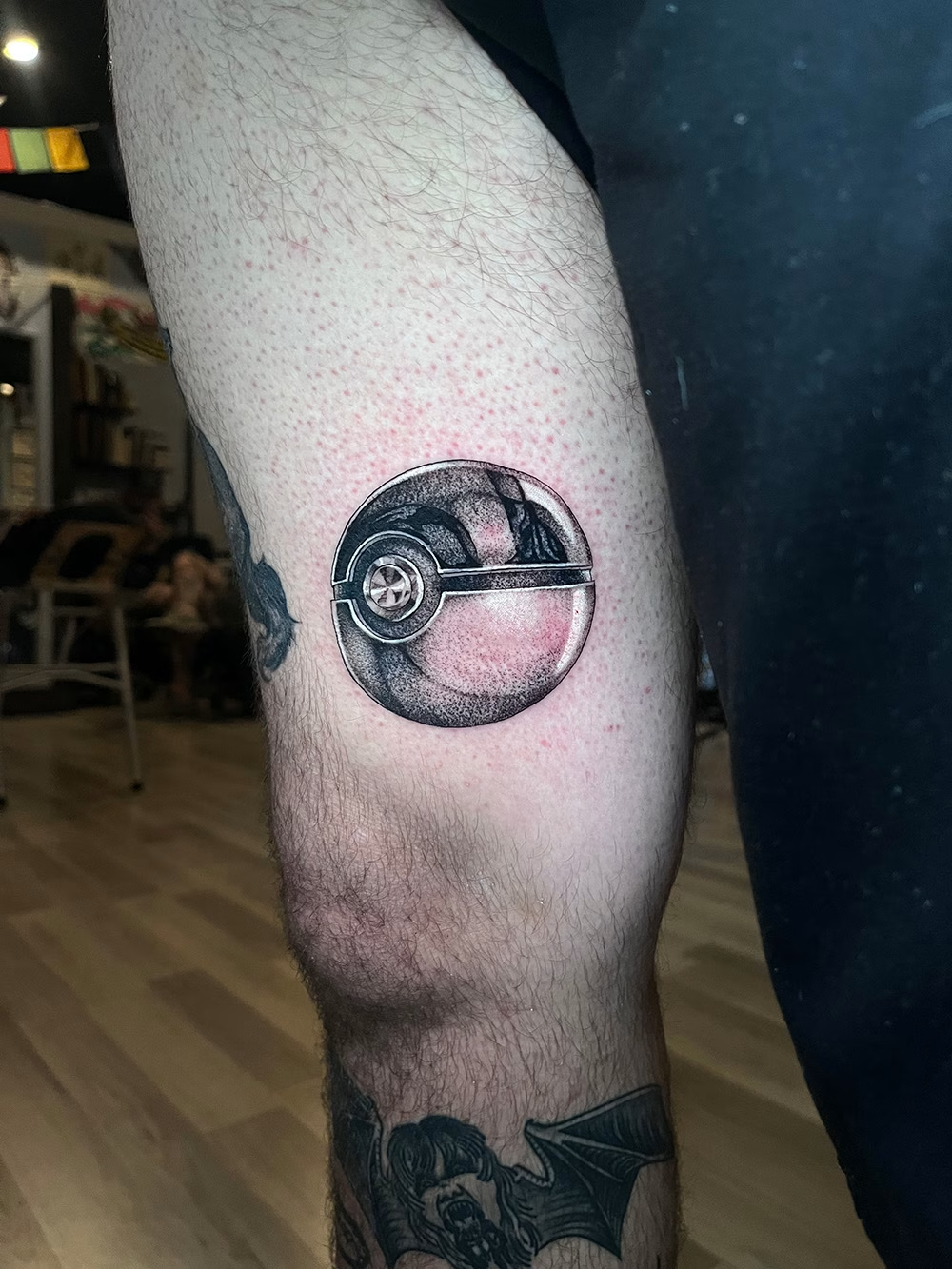
Shading control is the entire game. Realism is built from subtle gradations of tone—soft transitions between light and dark that create the illusion of three-dimensional form. A realism artist’s skill shows in how smoothly those transitions read on skin, not in how much detail is packed into the piece.
Skin is not paper. Paper holds a perfect gradient. Skin does not—it varies in thickness, texture, and healing behavior across the body, and ink spreads slightly under the surface as it settles. A realism artist has to plan for that from the first pass, not correct for it afterward.
Contrast has to be planned for aging. A realism piece that looks striking on day one can go flat within five years if the contrast is not deep enough. A good realism artist deliberately over-builds the dark values because they know the piece will soften over time.
Likeness is a different skill from detail. A portrait can have beautiful detail and still not look like the person. Likeness comes from proportion, eye placement, and the subtle geometry of the face.
Scale is non-negotiable. Realism does not compress well. A detailed portrait needs enough area for the features to remain distinguishable over decades. A realism artist will tell you when a design needs to be larger, and that is a sign of competence, not a sales tactic.
Who at Hello Tattoo Parlor Does Realism Work
Hello Tattoo Parlor’s team—Chase Fenner, Derek Olsen, Jared Allen, and Lane—works across traditional, fine line, and black-and-grey tattooing. Realism draws most heavily on the black-and-grey discipline: shading control, contrast planning, and the ability to build subtle gradations.
A few things worth knowing about how to choose an artist for this style:
-
Ask to see healed work in the specific subject you want. A realism artist who is excellent at animals may not be the right fit for a portrait, and vice versa. Ask for examples of the subject you are considering, not just realism in general.
-
Ask how old the healed examples are. A piece healed for a year tells you far more than a piece healed for a month.
-
Ask how the piece will age. This is the single most useful question for a realism tattoo. A good artist will tell you honestly how a specific design will look in ten or twenty years.
-
Confirm artist continuity. If your piece will take more than one session, confirm the same artist will handle all of them.
If you are unsure which artist fits your concept, say so when you book. The shop will match you based on your idea rather than assigning you to whoever has the next open slot.
Why the Reference Photograph Is Half the Finished Piece
Realism is the only style where the reference photograph is nearly as important as the artist. A blurry phone photo cannot become a crisp portrait. A photo with harsh overhead lighting cannot become a softly lit piece.
What makes a good reference:
-
High resolution. The image needs to be sharp enough that the artist can see the details you want preserved.
-
Even lighting. Harsh shadows or blown-out highlights limit what the artist can work with.
-
A clear view of the subject. The face should be well-lit and facing the camera, if it is a portrait.
-
Emotional accuracy. The expression matters. If the person you are commemorating had a specific smile, the reference needs to show it clearly.
-
Multiple angles if possible. For pets and animals especially, more than one reference helps the artist understand the three-dimensional form.
What happens when the reference is inadequate: An honest artist will tell you. Sometimes the answer is “this photo will not work for a portrait, but we can build a composition from it.” Sometimes the answer is “you need a better photo.” Sometimes the answer is “this subject is better served by a different style.” All three are legitimate outcomes, and a shop that never says any of them is a shop that will disappoint you.
How Realism Ages: The Reality Check
Realism ages differently from every other style, and understanding this before you commit is the single most important thing you can do—especially for an outdoor-active client.
Soft shading blurs faster than bold outlines. The smooth gradations that make realism work are also the first thing to soften over time. A realism piece will look different at year ten than at year one, and that is expected. The question is whether the subject still reads.
Skin tones shift. Color realism in particular is vulnerable to skin-tone shifts over time—warm tones can warm further, cool tones can go muddy. Black-and-grey realism is generally more stable, which is one reason many realism artists prefer it.
Scale determines survival. A realism piece that is too small for its detail will blur into an indistinct smudge within a decade. A realism piece at the right scale will still read clearly at year twenty.
Sun exposure hits realism hardest. Realism has less contrast to spare than other styles, so sun damage shows up faster. A realism piece on a forearm or calf will see sun on the trail every day it is exposed. That is fine—it is also the reason a thigh, back, or upper-arm placement often ages more gracefully for outdoor-active clients. Sunscreen after healing is the single most effective protection, and for realism it is non-negotiable.
Ask the artist directly: “How will this look in ten years?” A good realism artist answers with specifics, including what they will do to build in enough contrast and enough scale to survive.
Placement for an Active Body
If you are a cyclist, trail runner, hiker, swimmer, or paddler, the placement conversation for realism is different than it would be for a desk-bound client. A few practical considerations.
High-friction areas heal slower—and realism is less forgiving of imperfect healing. Waistbands, backpacks, sports bra straps, cycling shorts, and paddling tops all create friction against a healing tattoo. If your activity involves tight clothing over a placement area, plan the session for a period when that activity is paused. For realism, where the healing window determines contrast preservation, this is worth planning carefully.
Sun-exposed placements need more long-term protection. A realism piece on a forearm or calf will see sun on the trail every day it is exposed. That is fine—it is also the reason a thigh, back, or upper-arm placement often ages more gracefully for outdoor-active clients.
Joints move and heal accordingly. Inner elbows, the back of the knee, and armpit areas are more sensitive to tattoo and slower to heal. For a realism piece that wraps a joint, plan the session to include more frequent breaks.
The back and thigh work well for active lives. A realism piece on the back or thigh sees less sun and less friction in an outdoor lifestyle. For active Osprey clients, that combination is often the right answer—especially for a portrait or a large animal piece.
Ask the artist directly: “I hike the Legacy Trail every weekend—what placement will work for my life?” A good realism artist will factor that in from the first sketch.
Healing with an Outdoor Habit
Dense realism work takes two to three weeks of surface healing, with full settling over a longer window. For an outdoor-oriented client, a few extra rules apply.
No swimming while it is healing. No pools, no Gulf, no bay. That is not optional, and it is the single most common way healing goes wrong for active clients—and for realism it can permanently dull the contrast. If a paddling trip or a beach weekend is in your calendar, schedule around it.
Sun protection is constant. Keep the piece covered or protected while healing, and once healed, use sunscreen on exposed placements whenever you are outdoors for a long stretch. For realism, this is the single most effective long-term preservation step.
Sweat is manageable but not ideal. You can sweat during healing; you just need to clean the area promptly afterward. A post-hike rinse and gentle clean is fine. Sitting in a sweaty shirt for hours without cleaning is not.
Follow the shop’s instructions over general advice. Your artist will give you specific guidance based on the design and your skin. That guidance should take priority over anything you read online—including this page.
Realism Subjects and What Each One Demands
Realism’s subject range is narrower than other styles because not every subject works at tattoo scale. Here is how each behaves in practice.
Portraits. The most demanding realism subject. Likeness depends on proportion, eye placement, and the subtle geometry of the face. Portraits need enough scale for the features to remain distinguishable—generally a minimum of four to six inches for a face, often larger. Portraits of people and pets are the most common realism request.
Animals. More forgiving than portraits because fur and feathers create natural texture that helps mask slight imperfections. But eyes are still the deciding factor. Animal realism works well at forearm, calf, and thigh scale—and an animal piece is often a natural fit for outdoor-oriented clients.
Florals. Realism florals—roses, peonies, lilies—work because petals offer natural opportunities for shading gradation. Florals also scale down more gracefully than portraits, which makes them a good entry point for a first realism piece.
Landscapes and scenes. The least common realism subject, and the most scale-dependent. A landscape needs a large canvas—often a full forearm, calf, or back panel—to read clearly.
Objects and symbolic compositions. Daggers, watches, keys, and other objects can work in realism, especially in black-and-grey. These tend to be more forgiving than portraits.
If you are drawn to more than one, that is normal. The consultation is where the options get narrowed based on placement, scale, and what will actually hold up over time.
Placement and Scale for Realism
Realism does not scale down as well as any other style. Placement and scale are the most consequential decisions you will make—and for an active client, friction and sun exposure make placement decisions more consequential than usual.
Forearm and upper arm. The most common realism placements. The forearm accommodates portraits and animals at a workable scale; the upper arm offers flexibility for pieces that may later connect to a larger composition.
Thigh and calf. The thigh offers the best combination of space and sun protection for realism—it sees less sun than a forearm, which means the piece ages more gracefully. For outdoor-active clients, this is a genuine advantage worth taking seriously. The calf works well for vertical compositions but is more sun-exposed on the trail.
Back. The largest canvas, and the natural home for complex compositions involving multiple subjects or full scenes—and one of the more forgiving placements for an active lifestyle.
Shoulder and chest. Good for larger designs, but the chest and shoulder see more sun than the thigh or back.
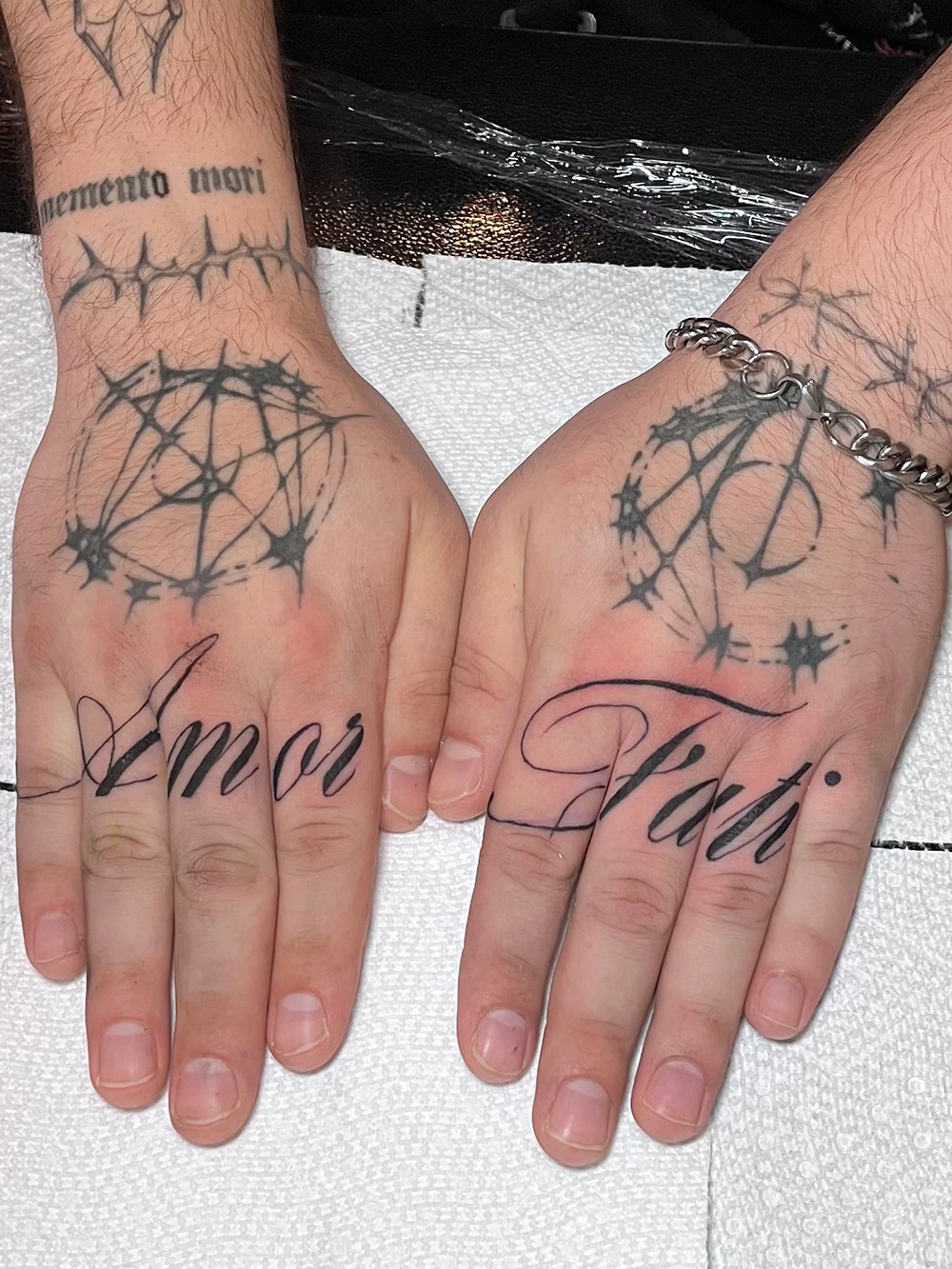
Small placements—wrist, ankle, behind the ear, fingers. These are the hardest placements for realism, and for many designs they are simply not workable. A realism artist will typically steer you toward a different style or a larger placement rather than shrink a detailed design into a space that cannot hold it.
During a consultation, the artist will sketch placement boundaries on your skin or describe them precisely, so you can see the scale before committing.
The Consultation and What to Expect
Every realism project at Hello Tattoo Parlor begins with a consultation, usually twenty to thirty minutes, and it covers more than a typical style consultation because realism has more variables.
-
Your reference photograph. Bring the highest-quality image you have, and be prepared to discuss what matters most about it—the expression, the lighting, the specific detail you want preserved.
-
Placement and scale. The artist will sketch boundaries on the skin or describe them precisely, and will tell you honestly if the scale is too small for the detail.
-
Subject fit. Some subjects work better in realism than others, and some work better in adjacent styles. If your idea would be better served by neo-traditional, fine line, or black-and-grey, the artist will tell you.
-
Color versus black and grey. Black-and-grey realism is generally more stable and more forgiving of aging; color realism captures a wider visual range but requires more careful planning—and for outdoor-active clients, black-and-grey may be the better long-term choice.
-
Session estimate and pricing. Hello Tattoo Parlor prices custom work hourly. Realism is typically the most time-intensive style at any given scale because of the shading work. The artist will give a realistic session count during the consultation, not before.
-
How the piece will age. Ask directly. A good realism artist answers with specifics.
-
Aftercare. Realism pieces need attentive healing. You will get a walkthrough before you leave.
If you already have a clear vision and a good reference, bring them. If you have only a vague idea—”something realistic, maybe a portrait of my dog”—that is also a valid starting point.
Preparing for a Realism Session and Healing
A few practical steps make a realism session smoother:
-
Eat a real meal beforehand. Realism sessions are shading-intensive and run long, and low blood sugar is the most common reason clients need to stop early.
-
Hydrate across the day before. Not just the morning of. This matters more if you are active.
-
Wear clothing that exposes the placement area.
-
Bring your best reference, not a screenshot of a screenshot. Resolution matters more for realism than for any other style.
-
Plan the US-41 drive realistically. US-41 is straightforward, but season traffic can slow it. Leave buffer time on either side of the appointment.
-
Plan a light day after. A long shading session is tiring, and the drive back south on US-41 is easier when the rest of the day is quiet.
Healing: realism pieces with layered shading take two to three weeks of surface healing. Keep the area clean, avoid picking or scratching, and protect it from direct sun while it heals. Sun exposure during healing is the single most common way a realism piece loses contrast. No swimming in the Gulf, the bay, or the pool during surface healing. Your artist will give you specific instructions, and those should take priority over generic advice you find online.
Frequently Asked Questions from Osprey Clients
How far is Hello Tattoo Parlor from Osprey?
Roughly twenty to thirty minutes from most of Osprey via US-41 north through Gulf Gate into downtown Sarasota. The shop at 530 S Orange Ave is a straight arterial drive from the community.
I cycle and hike the Legacy Trail regularly. How does that affect my realism tattoo?
It affects placement and healing more than the tattoo itself—and for realism, that matters more than for any other style. High-friction placements like outer thighs and shoulder tops can heal more slowly under tight clothing or pack straps, and imperfect healing shows up faster on realism than on other styles. Sun-exposed placements like forearms and calves need more long-term protection. Tell the artist about your activity level during the consultation so the placement plan accounts for your life.
Can I swim in the bay while my tattoo is healing?
No. No pools, no bay, no Gulf during surface healing. That is the single most common way healing goes wrong for active clients, and for realism it can permanently dull the contrast.
Which artist should I book for a realism piece?
Chase Fenner, Derek Olsen, Jared Allen, and Lane all work across the technical range realism draws on, particularly black-and-grey shading. The shop will match you with the artist whose portfolio best fits your specific subject when you book.
How do I know if a realism artist is good?
Look at healed work, not just fresh work. Ask for examples of the specific subject you are considering. Look at the eyes and the transitions between light and dark. And ask the artist directly how a specific design will age.
Will a realism piece still look good in twenty years?
A well-planned one will. The key factors are enough scale for the detail, deep enough contrast to survive softening, and sun protection after healing. Placement matters more for realism than for other styles—a thigh or back will generally age more gracefully than a forearm or calf, especially for an outdoor-active client.
Do I need a large piece to get a “real” realism tattoo?
Yes, more than any other style. Realism does not compress well, and a detailed portrait or animal needs enough area for the features to remain distinguishable over decades.
How much do realism tattoos cost?
Pricing depends on size, complexity, placement, and session time. Realism is typically the most time-intensive style at any given scale because of the shading work. Contact the shop for an estimate based on your specific idea.
Are realism tattoos suitable for a first tattoo?
Yes, if the subject and scale fit your preferences. Realism florals and smaller animal pieces work well as first tattoos. Detailed portraits are a harder first piece because the scale requirements are larger and the commitment is longer.
Where can I get a realism tattoo near Osprey?
Hello Tattoo Parlor is at 530 S Orange Ave in downtown Sarasota, a straight run north on US-41. Call the shop or use the contact form to book a consultation.
Book a Realism Consultation from Osprey
Hello Tattoo Parlor is at 530 S Orange Ave, Sarasota, FL 34236. If you are considering a realism piece, the next step is a consultation—bring your best reference, tell us what your activity level looks like, ask to see healed work in your subject, and we will tell you honestly whether the subject and scale will work, what the piece will realistically take, and how it will age.
For a full explanation of the style itself, see our complete guide to realism tattoos in Sarasota. If you are also considering neo-traditional or Japanese-style work, our guides to those styles in Osprey cover them separately.
Call the shop or use the contact form to book a consultation.
Same Service We Provide In Your Nearby Area
Explore realism tattoo services in nearby communities to find a convenient location for your next tattoo.
Other Services We Provide
Explore additional tattoo services from Hello Tattoo Parlor to find a style that suits your preferences.
Come See What Hello Tattoo Parlor Feels Like.
The best way to understand the parlor is to step inside. Come meet us, see the work, and start a conversation about what you want to create.