Tattoo Cover-Ups in North Sarasota Florida
North Sarasota is closer to Hello Tattoo Parlor than any other area covered on this site. From Newtown, from Indian Beach, from Sapphire Shores, from the Ringling corridor, or from the US-41 spine near the airport, the shop at 530 S Orange Ave is a short drive into the city core—five to fifteen minutes, depending on where you start. That proximity matters more for a cover-up than for any other decision on this site, because the first step in a cover-up is the assessment, and the assessment has to happen in person. You cannot get an honest answer about whether your existing tattoo can be covered from a photo alone—the artist has to see the ink density, the color, the linework, and how the skin has healed. A walkable shop makes that first step genuinely easy. This page covers how cover-ups actually work, when laser fading is worth considering, what a cover-up consultation covers, and which designs tend to work. For a full explanation of the category, see our complete guide to tattoo cover-ups in Sarasota.
You Can Walk In and Get an Assessment
This is the single biggest advantage of proximity for a cover-up, and it is worth starting with.
The assessment has to happen in person. Photos help, but they cannot show ink density, how the ink has settled, or how the skin has healed. A cover-up artist needs to see the existing tattoo itself—not just a photo of it—to tell you honestly what is possible. That makes a walkable shop a genuine advantage.
Walk in on a lunch break. A cover-up assessment does not need a full consultation. If you live or work in North Sarasota, you can stop by on a break, show the artist the existing tattoo, and get a quick read on whether your idea is achievable—before you commit to a longer consultation.
Ask the hard question up front. “Can this be covered, and what would it take?” That is the question to ask first. A good artist will answer it directly, even if the answer is “not with the design you have in mind.”
It is a low-stakes first visit. A cover-up assessment is not a session and does not require a deposit. It is simply a chance to see what is possible. If it turns into a consultation, great. If it does not, that is fine too.
Visitors can do this too. If you are in North Sarasota for the Ringling Museum, the Asolo Repertory Theatre, or another cultural anchor, and you have an old tattoo you have been thinking about covering, a walk-in assessment is a genuinely low-stakes way to start—though a full cover-up is usually not realistic within a short stay unless the existing tattoo is small, light, and easy to cover.
How Cover-Ups Actually Work
Most people assume a cover-up means putting a new image over an old one. That is not quite right. A cover-up means building a new design whose dark areas land exactly where the old tattoo’s dark areas are, so the old ink becomes part of the new structure. Understanding that changes what you should expect.
Dark ink can only be covered by darker ink. This is the single most important principle. Tattoo ink sits under the skin and is visible through it. To hide an old dark line, the new design has to place an equally dark or darker area over it. You cannot cover black with light shading.
Color matters enormously. Black is the easiest color to cover. Green and red are the hardest—green in particular is notoriously difficult. If your existing tattoo has green in it, the artist will need to plan around it, and the honest answer may involve laser fading first.
Linework has to be absorbed into new structure. Old outlines cannot be hidden under light shading. They have to be incorporated into the new design’s structure—as the stem of a flower, the edge of a leaf, the outline of an animal’s ear. A good cover-up artist will look at your existing lines and see the new design inside them.
The new design almost always ends up 2–3× the size of the original. To build enough dark structure around the old tattoo, the new piece usually needs significantly more space than the original. A cover-up that is the same size as the original is usually not possible.
Placement flexibility expands the options. A cover-up on a forearm has more room to expand than one on a wrist or an ankle.
When Laser Fading Is Worth It
Laser fading is not a last resort. It is the option that expands what is possible. For a lot of cover-ups, one to three laser sessions is the difference between “your idea is not achievable” and “your idea is now achievable.”
When laser fading helps most: when the existing tattoo has green or red in it, when it is extremely dark or densely packed, when it is in a placement with limited room to expand, or when the new design you want is smaller or lighter than what the cover-up would otherwise require.
When it is not necessary: when the existing tattoo is light, faded, or mostly black linework, and when the placement has room to expand the new design around it.
What it involves: a professional laser clinic, typically three to six sessions spaced six to eight weeks apart, that lightens the old ink enough to give the cover-up artist more flexibility. It is not a full removal—it is a partial fading, and the goal is to lighten, not to erase.
The consultation is where you find out whether laser fading would meaningfully expand your options. An honest artist will tell you if it would, and will tell you if it would not.
What a Cover-Up Consultation Covers
Cover-ups are the one category where the consultation is genuinely decisive. The artist has to see the existing tattoo in person—not from a photo—to assess the ink density, the color, the linework, and the placement. Here is what a cover-up consultation covers.
An in-person assessment of the existing tattoo. Photos help, but they cannot show ink density, how the ink has settled, or how the skin has healed. Bring the tattoo, not just a photo of it.
An honest assessment of what is possible. The artist will tell you what designs can work with your existing ink, and what designs cannot. If your idea is not achievable, an honest artist will say so rather than take a deposit and hope for the best.
A discussion of size and placement. The new design will almost certainly be larger than the original. The consultation is where you settle on how much larger and where it will sit.
A discussion of laser fading. If laser fading would meaningfully expand the options, the artist will tell you. If it would not, they will tell you that too.
A session estimate and pricing. Cover-ups are typically more time-intensive than a fresh tattoo of the same size. The artist will give a realistic session count.
Cover-Up Designs That Work
The best cover-up design depends on your existing tattoo, not on a trend. Here are the categories that tend to work well, and why.
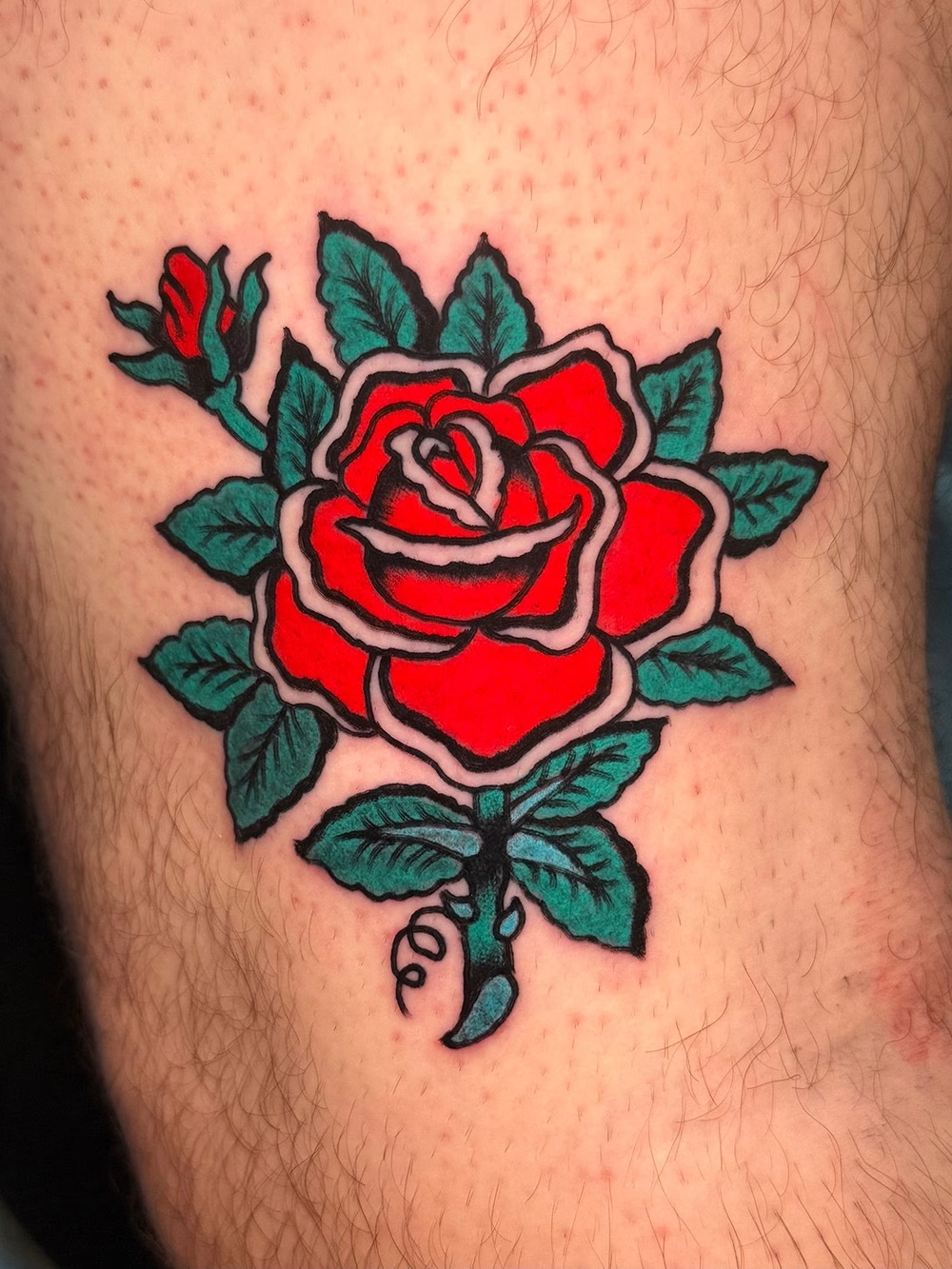
Floral designs. Petals, leaves, and shaded centers are the most popular cover-up category because they offer natural places to absorb old lines and dark areas.
Animal artwork. Fur, feathers, and textured shading offer a lot of dark structure to work with, which makes animals a natural fit for covering old ink.
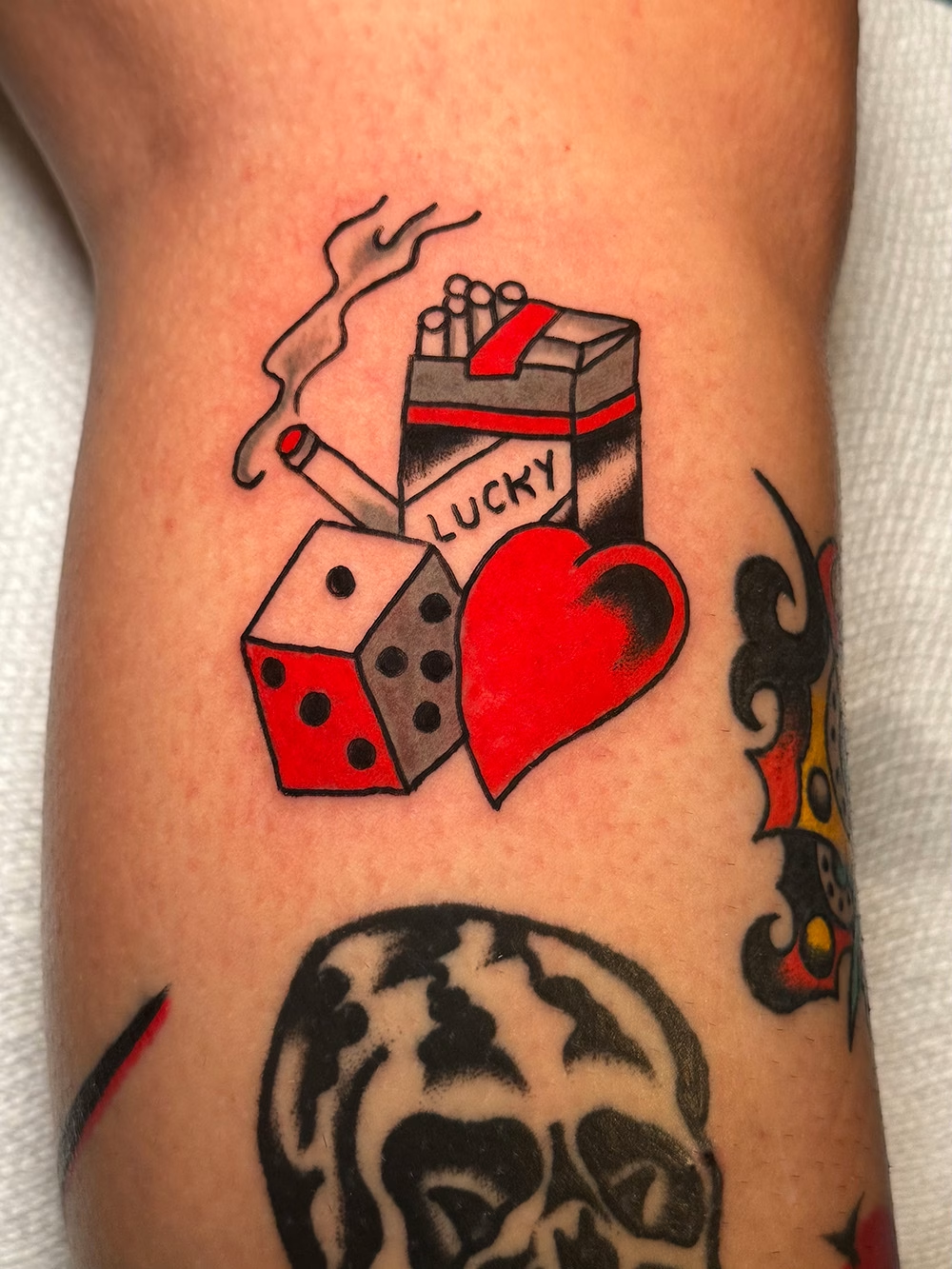
Traditional designs. Bold outlines and strong colors are a good fit for cover-ups because they are built to be dark and structured.
Blackwork and ornamental patterns. Dark shapes and heavy contrast are the most direct way to cover old ink, which makes blackwork and ornamental designs a good fit for tattoos that are too dark for lighter designs.
Japanese-inspired work. The bold outlines, dark backgrounds, and structured composition of Japanese work make it a strong cover-up category, provided the existing tattoo’s dark areas can be absorbed into the new composition.
Geometric patterns. Geometric designs can work for some existing tattoos, especially those with regular linework, but they offer less flexibility than organic designs.
If you want to cover a name, a date, or a small symbol, the artist will assess whether it can be incorporated into a larger design or concealed by a new composition. Covering small lettering is often the hardest cover-up challenge.
A First Cover-Up in Your Own Neighborhood: The Trust Question
North Sarasota has a substantial population of residents who have never had a cover-up—often because they have not found a shop nearby that felt like it took them seriously. That is a real concern, and it deserves a direct response rather than a marketing line.
You do not need to already know what is possible. A first cover-up assessment can be as simple as “can this be covered?” An honest artist will look at the existing tattoo and tell you directly what designs could work, what would need to be larger, and whether laser fading would help.
You do not need to be sold. A consultation is not a commitment to book. If you leave without a deposit, that is a legitimate outcome. The point of the appointment is to decide whether the fit is right.
You should expect to be talked to like an adult. If a shop cannot explain its pricing, its hygiene practices, and how a cover-up would actually work in plain language, that is a signal to walk away. A first cover-up deserves a straight answer, not a vibe.
You are allowed to change your mind. A consultation that leads to “actually, I want to think about this more” is a good consultation. Artists see this often and it is not a problem.
If this is your situation, say so when you book. The artist will slow the conversation down accordingly—and will tell you honestly whether a cover-up is the right choice for your existing tattoo.
Same Service We Provide In Your Nearby Area
Explore tattoo cover-up services in nearby communities to find a convenient location for your next tattoo.
Other Services We Provide
Explore additional tattoo services from Hello Tattoo Parlor to find a style that suits your preferences.
Come See What Hello Tattoo Parlor Feels Like.
The best way to understand the parlor is to step inside. Come meet us, see the work, and start a conversation about what you want to create.