Neo Traditional Tattoos in Longboat Key Florida
Longboat Key is eleven miles of barrier island, and where you start on it changes the answer to almost every practical question about getting a neo-traditional tattoo. If you are at the south end near St. Armands, the shop is a short bridge-and-causeway run into downtown Sarasota. If you are at the north end near Anna Maria, it is a longer trip that has to clear the island first. That geography matters for a neo-traditional project because the style is detail-dense and time-intensive, and a larger piece often takes two to four sessions over several months. When every session involves an island drive, that is a real planning factor. This page covers what Longboat Key residents and seasonal owners specifically need to know. For a full explanation of the style itself, see our complete guide to neo-traditional tattoos in Sarasota.
Discover Neo Traditional Tattoo Designs in Longboat Key Florida
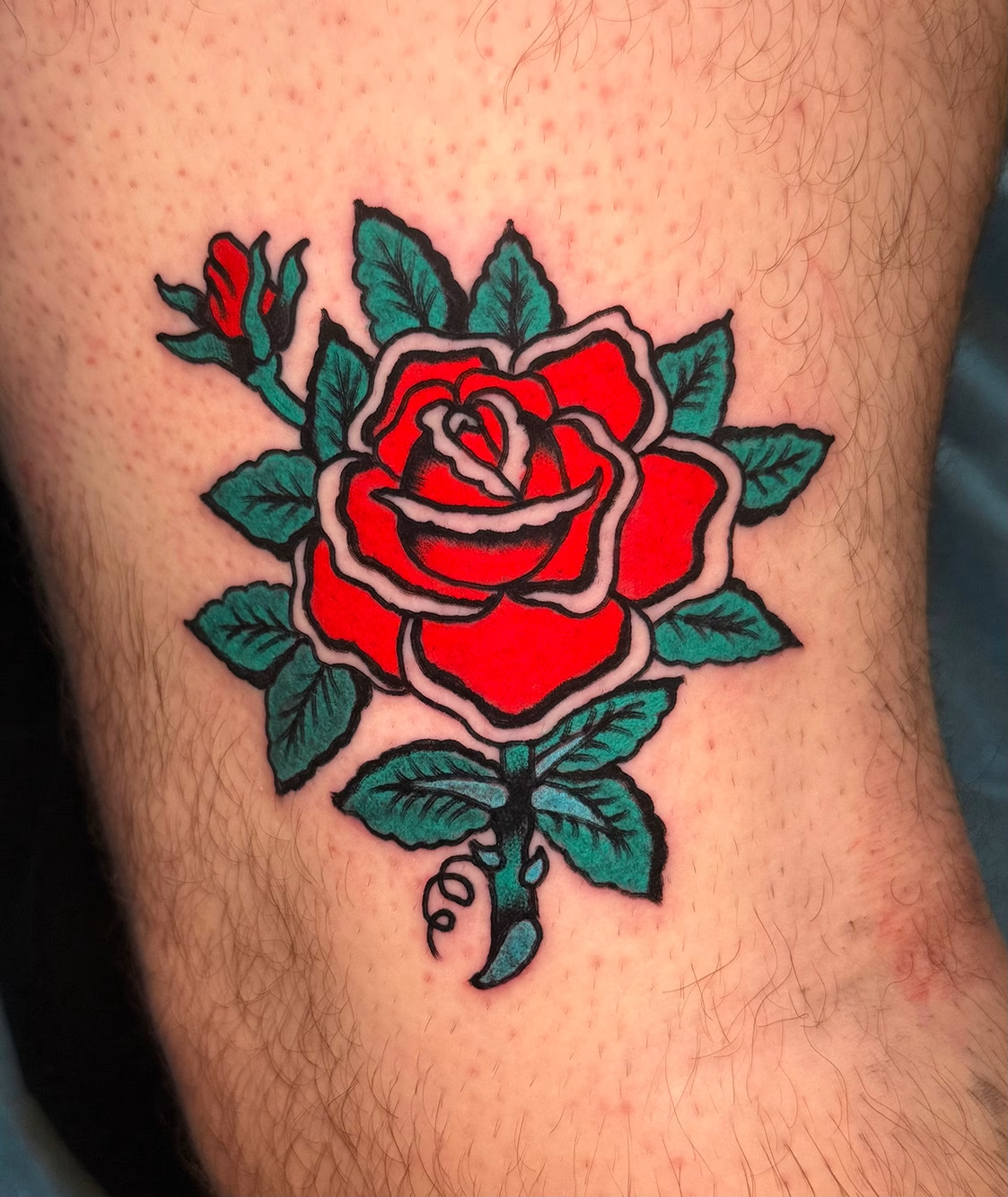
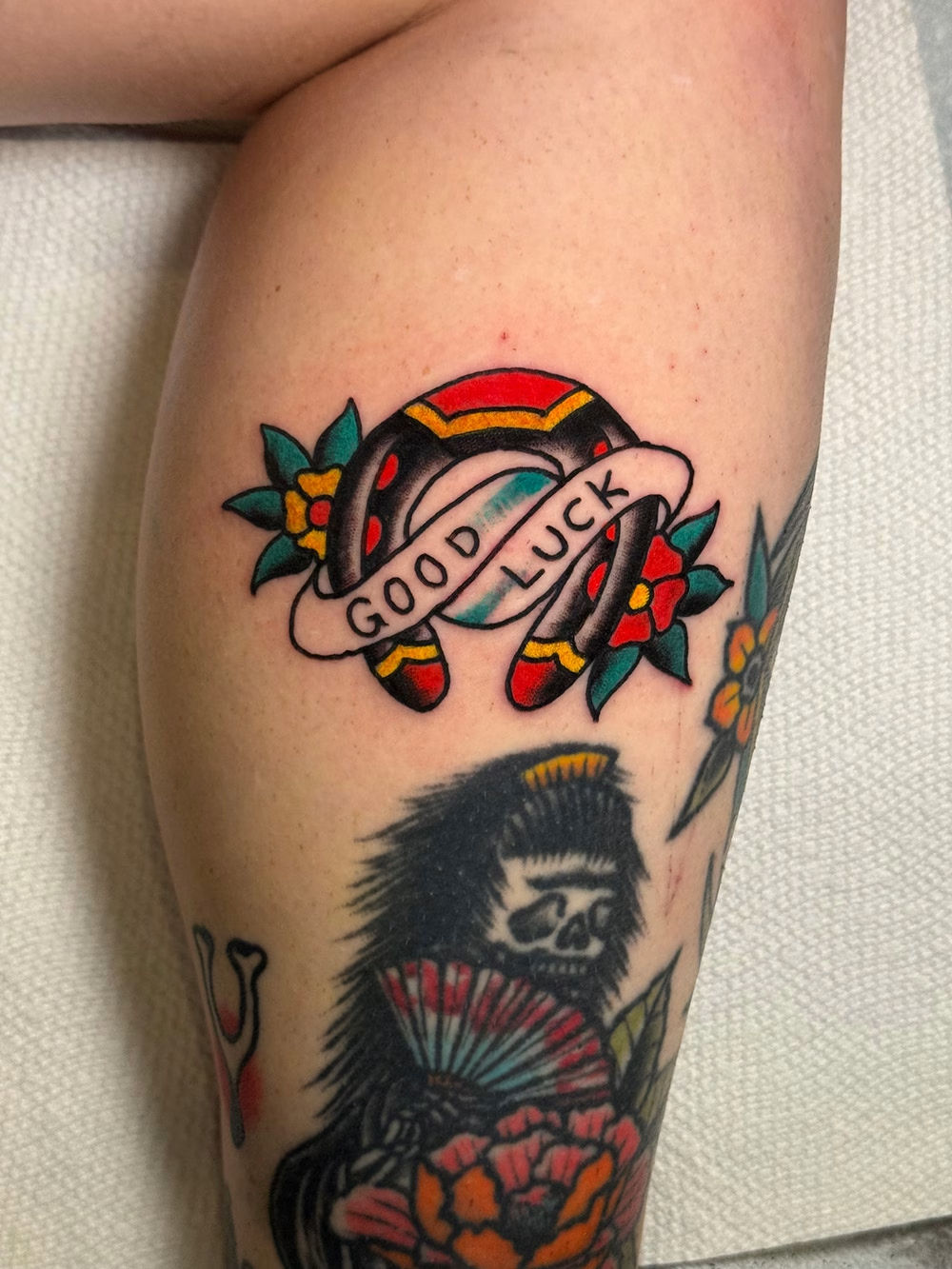
Neo traditional tattoos build on the foundations of traditional tattoo art while incorporating more intricate details, expanded color palettes, and greater visual depth. These designs often feature strong outlines, carefully layered shading, decorative elements, and expressive imagery. The combination creates artwork that feels recognizable yet more detailed and contemporary.
Popular neo traditional subjects include roses, snakes, birds, wolves, tigers, skulls, mythical creatures, and portrait-inspired designs. Many pieces also incorporate ornamental patterns, leaves, jewels, or other decorative details to create a balanced composition.
At Hello Tattoo Parlor, you can explore different concepts based on your interests, preferred imagery, and desired tattoo placement. You might want a bold animal design that represents strength, a floral composition that reflects personal growth, or a symbolic piece inspired by an important experience. Bringing reference images and discussing your ideas helps establish the direction for your artwork.
Neo traditional tattooing offers flexibility in both size and complexity. Smaller designs can focus on a single subject, while larger pieces provide additional space for layered colors, intricate details, and supporting elements.
Why Choose Hello Tattoo Parlor for Neo Traditional Tattoos in Longboat Key Florida?
Choosing a tattoo shop is an important step when planning a detailed tattoo. Neo traditional artwork combines several visual elements, including linework, shading, color, and composition. Thinking carefully about these elements helps you choose a design that suits your personal style and the area where you want your tattoo.
Creative and Personalized Concepts
Your tattoo can be inspired by an existing design or developed around your own idea. Discussing the meaning behind your preferred subject helps guide the composition. Whether you want a meaningful symbol, a striking animal, or a decorative floral design, the goal is to select artwork that feels personal rather than generic.
Bold Lines and Detailed Shading
Neo traditional tattoos are known for their confident outlines and dimensional shading. These features help separate individual elements and give the artwork a strong visual presence. The balance between bold lines and smaller details is especially important when deciding how large the tattoo should be.
Expressive Colors and Composition
Although neo traditional tattoos often feature rich colors, the style can also be adapted to suit different visual preferences. Carefully chosen shades emphasize the main subject, create contrast, and connect decorative elements. Discussing your preferred colors and overall look helps shape a design that feels cohesive.
Standards, Discretion, and Hygiene
Longboat Key’s client base tends to be older and more established than the average tattoo customer, and the questions that come up in consultation are often about standards rather than style. That is a good instinct, and the answers matter—especially for a color-heavy style where the technical bar is higher.
Hygiene and safety. A serious shop uses single-use needles, sterile technique, and a clean station for every session. If you are considering a larger neo-traditional piece, ask about the shop’s hygiene practices directly during the consultation. A shop that is happy to explain them is the one you want.
Color work has its own technical demands. Neo-traditional is often color-forward, and color packing, saturation, and healing are different skills from black-and-grey work. Ask specifically about the artist’s experience with the palette you want.
Discretion. Many Longboat clients prefer a low-key appointment—no social media posting, no public photos of healing work, no discussion of the piece outside the shop. That is a reasonable request and worth saying out loud in the consultation. A good artist will respect it without making it awkward.
Consistency across sessions. A multi-session neo-traditional piece requires the same artist throughout, and the same technique from session one to session four. Ask whether the same artist will handle every session of a long-format project. For a piece that spans seasons, that continuity matters more than almost anything else.
Honesty about scope. If your idea would be better served by a different specialty, or your scale is too small for the detail you want, an honest artist will tell you. That is not a sales tactic—it is the most useful thing a shop can say to you.
Who at Hello Tattoo Parlor Does Neo-Traditional Work
Hello Tattoo Parlor’s team—Chase Fenner, Derek Olsen, Jared Allen, and Lane—works across traditional, fine line, and black-and-grey tattooing. Neo-traditional sits at the intersection of all three: the bold linework of traditional, the controlled detail of fine line, and the shading discipline of black-and-grey.
A few things worth knowing about how to choose an artist for this style:
-
Ask to see recent work in the specific subject you want. A neo-traditional animal portrait and a neo-traditional floral piece draw on different skills. Ask for examples of the subject you are considering, not just the style in general.
-
Ask about color experience if your design is color-heavy. Neo-traditional is often color-forward, and color work has its own technical demands—packing, saturation, and healing. This is especially relevant for a style where the color is part of the visual appeal.
-
Ask how the piece will age. This is the single most useful question for a neo-traditional tattoo. A good artist will tell you honestly how a specific design will look in ten or twenty years, including how the colors will settle.
-
Confirm artist continuity. If your piece will take more than one session—and for a seasonal resident, it almost certainly will—confirm the same artist will handle all of them.
If you are unsure which artist fits your concept, say so when you book. The shop will match you based on your idea rather than assigning you to whoever has the next open slot.
The Aging Reality: What Longboat Key Clients Should Know Before Booking
Neo-traditional tattooing is more detail-dense than traditional work, which means it ages differently. This is worth understanding before you commit, because it is the single most common source of regret in this style—and Longboat Key’s sun exposure makes it more important than usual.
Detail density versus scale. A neo-traditional piece with lots of fine shading and small decorative elements needs enough scale to hold that detail over time. A design that looks crisp at one inch will blur at year ten. A good artist will tell you when a concept needs to be larger to hold up—and will sometimes argue for a simplified design at a smaller scale rather than a compressed detailed one.
Color settles; it does not disappear. Neo-traditional pieces with rich color will settle over time, and the colors will soften. This is normal and expected. What matters is whether the underlying outlines and composition still read after the color softens—and that depends on strong outline work and enough negative space in the design.
Sun exposure is the long-term enemy. On a barrier island, sun is unavoidable. A neo-traditional piece on a forearm or shoulder will see far more sun than one on a thigh or back, and sun fades color faster than anything else. Sunscreen after healing is the single most effective thing you can do to protect a neo-traditional piece. For Longboat residents who walk the beach or spend time on the water, this is a daily habit, not a seasonal one.
Placement decisions should account for this. If you want a neo-traditional piece that will still look crisp in twenty years, a thigh or back placement will generally age more gracefully than a forearm or calf. That is a real trade-off worth discussing in the consultation.
Ask the artist directly: “How will this look in ten years?” A good artist answers with specifics. A shop that responds with reassurances instead of details is a shop worth walking away from.
Popular Neo-Traditional Subjects for Longboat Key Clients
Neo-traditional’s subject range is wide, and Longboat Key clients tend to arrive with one of a handful of categories in mind. Here is how each behaves in practice.
Florals. Roses, peonies, lilies, and other flowers are the most common entry point. They offer natural opportunities for layered shading and rich color, and they work at almost any scale. Florals are also the most forgiving subject for first-time neo-traditional clients because the composition can be as simple or as elaborate as you want.
Animals. Lions, wolves, foxes, tigers, snakes, and birds are the classic neo-traditional subjects. Their features—eyes, fur, feathers—are where the style’s expressive detail shows most clearly. Animal portraits work best at a size that gives the face room to read; a small animal portrait is one of the harder neo-traditional requests to execute well.
Portraits. Stylized facial features, expressive color, and decorative backgrounds are the neo-traditional approach to portraiture—closer to an illustrated interpretation than a photographic one. Portraits require careful planning around proportions, reference quality, and placement, and they are the category where the consultation matters most.
Mythical creatures. Dragons, phoenixes, and serpents offer the style’s most dramatic opportunities for elaborate shapes and contrasting palettes. These designs tend to be larger, and they benefit from being planned as a full composition.
Skulls and symbolism. Skulls, daggers, hearts, moons, and other symbolic elements are reinterpreted through neo-traditional linework and decorative detail. These work well as standalone pieces or as components of a larger composition.
If you are drawn to more than one, that is normal. The consultation is where the options get narrowed based on placement, scale, and what will actually hold up over time.
Placement and Scale for Longboat Key Clients
Neo-traditional work is more detail-dense than traditional work, so placement and scale matter more. A working guide:
Forearm and upper arm. The most common placements. The forearm accommodates elongated designs and standalone portraits; the upper arm offers flexibility for pieces that may later connect to a larger composition.
Shoulder and chest. Good for larger designs with multiple elements, including animal portraits and ornamental compositions.
Thigh and calf. The thigh offers space for elaborate designs and sees less sun, which is a genuine aging advantage on a barrier island. The calf works well for vertical compositions.
Back. The largest canvas, and the natural home for complex compositions involving multiple subjects or decorative backgrounds.
Small placements—wrist, ankle, behind the ear, fingers. These are the hardest placements for neo-traditional work. The style’s detail density does not scale down well. If you want a small piece, the artist will typically simplify the design rather than shrink it proportionally.
During a consultation, the artist will sketch placement boundaries on your skin or describe them precisely, so you can see the scale before committing.
The Consultation and What to Expect
Every neo-traditional project begins with a consultation, usually twenty to thirty minutes. It covers:
-
Your concept and references. Bring images of compositions you respond to, even if the subject is different from what you want.
-
Placement and scale. The artist will sketch boundaries on the skin or describe them precisely so you can visualize the piece.
-
Style fit. Some concepts work better in neo-traditional than others, and some work better in adjacent styles. If your idea would be better served by traditional, fine line, or black-and-grey, the artist will tell you.
-
Session estimate and pricing. Hello Tattoo Parlor prices custom work hourly. Neo-traditional pieces are typically more time-intensive than traditional pieces at the same scale. The artist will give a realistic session count during the consultation, not before. A deposit secures the appointment and is applied to the final session.
-
How the piece will age. Ask directly. A good artist answers with specifics.
If you already have a clear vision, bring it. If you have only a vague idea—”something neo-traditional, maybe a fox”—that is also a valid starting point.
Preparing for the Session and Healing
A few practical steps make a neo-traditional session smoother:
-
Eat a real meal beforehand. Color-heavy sessions run long, and low blood sugar is the most common reason clients need to stop early.
-
Hydrate across the day before.
-
Wear clothing that exposes the placement area. Short sleeves for a forearm, loose shorts for a thigh.
-
Bring references, not just descriptions.
-
Plan the island drive realistically if you are at the north end. Gulf of Mexico Drive is one road, and season traffic can turn a forty-minute trip into an hour. Leave buffer time on either side of the appointment.
-
Plan a light day after. A long shading session is tiring, and the drive back down the island is easier when the rest of the day is quiet.
Healing: neo-traditional pieces with layered color take two to three weeks of surface healing. Keep the area clean, avoid picking or scratching, and protect it from direct sun while it heals. Sun exposure during healing fades color faster than almost anything else—and on a barrier island, sun is part of daily life. No swimming in the Gulf or the pool during surface healing. Your artist will give you specific instructions, and those should take priority over generic advice you find online.
Frequently Asked Questions from Longboat Key Clients
How far is Hello Tattoo Parlor from Longboat Key?
It depends on which end of the island you are starting from. From the south end near St. Armands and New Pass Bridge, the drive is roughly fifteen to twenty minutes via the John Ringling Causeway into downtown Sarasota. From the north end near Longboat Pass and Anna Maria, expect thirty to forty minutes because you first have to clear the island via Gulf of Mexico Drive.
I am only on the island for the season. Can I plan a large neo-traditional piece?
Yes, and the seasonal calendar actually fits this style well. Most half-sleeves run two to four sessions, and a back or chest piece can be planned across consecutive seasons. Starting a piece early in the season and continuing it in the next is a common pattern for seasonal residents.
Which artist should I book for a neo-traditional piece?
Chase Fenner, Derek Olsen, Jared Allen, and Lane all work across the technical range this style requires. The shop will match you with the artist whose work best fits your concept when you book.
Will the same artist handle every session of a long-format piece?
That is something to confirm in the consultation. For a multi-session neo-traditional piece, continuity matters—the same artist across all sessions keeps the composition, color palette, and technique consistent. Ask directly.
Will a neo-traditional piece still look good in twenty years?
A well-planned one will. The key factors are enough scale for the detail, strong underlying outlines, and sun protection after healing. Placement matters too—a thigh or back will generally age more gracefully than a forearm or calf, especially on a sun-exposed island.
Do I need a large piece to get a “real” neo-traditional tattoo?
No, but neo-traditional does not scale down as well as some styles. Small pieces with heavy detail blur faster. The artist will typically simplify the design at a smaller scale rather than compressing all the detail.
How much do neo-traditional tattoos cost?
Pricing depends on size, complexity, placement, and session time. Neo-traditional pieces are typically more time-intensive than traditional pieces at the same scale. Contact the shop for an estimate based on your specific idea.
Are neo-traditional tattoos suitable for a first tattoo?
Yes, if the design and placement fit your preferences. Smaller neo-traditional pieces—a floral on the upper arm, a compact animal portrait on the forearm—work well as first tattoos. Very detailed designs at a small scale are not ideal for a first piece because they blur faster.
Where can I get a neo-traditional tattoo near Longboat Key?
Hello Tattoo Parlor is at 530 S Orange Ave in downtown Sarasota, a bridge-and-causeway drive from either end of the island. Call the shop or use the contact form to book a consultation.
Book a Neo-Traditional Consultation from Longboat Key
Hello Tattoo Parlor is at 530 S Orange Ave, Sarasota, FL 34236. If you are considering a neo-traditional piece, the next step is a consultation—bring your references, tell us what you are drawn to, and we will tell you honestly whether the style is the right fit, what the piece will realistically take, and how it will age.
For a full explanation of the style itself, see our complete guide to neo-traditional tattoos in Sarasota. If you are also considering Japanese-style work, our Japanese tattoos in Longboat Key guide covers that separately.
Call the shop or use the contact form to book a consultation.
Same Service We Provide In Your Nearby Area
Explore neo traditional tattoo services in nearby communities to find a convenient location for your next tattoo.
Other Services We Provide
Explore additional tattoo services from Hello Tattoo Parlor to find a style that suits your preferences.
Come See What Hello Tattoo Parlor Feels Like.
The best way to understand the parlor is to step inside. Come meet us, see the work, and start a conversation about what you want to create.