
Neo Traditional Tattoos in Sarasota Florida
Neo traditional tattoos in Sarasota Florida are a great choice for anyone who loves bold outlines, rich colors, decorative details, and modern interpretations of classic tattoo art. At Hello Tattoo Parlor, neo traditional designs offer an opportunity to express your personality through creative compositions inspired by traditional tattooing and contemporary artistic techniques. Whether you prefer detailed animals, expressive portraits, floral artwork, or symbolic designs, this style provides plenty of room to create a tattoo that reflects your individual taste.
Discover Neo Traditional Tattoo Designs in Sarasota Florida
Neo traditional tattoos build on the foundations of traditional tattoo art while incorporating more intricate details, expanded color palettes, and greater visual depth. These designs often feature strong outlines, carefully layered shading, decorative elements, and expressive imagery. The combination creates artwork that feels recognizable yet more detailed and contemporary.
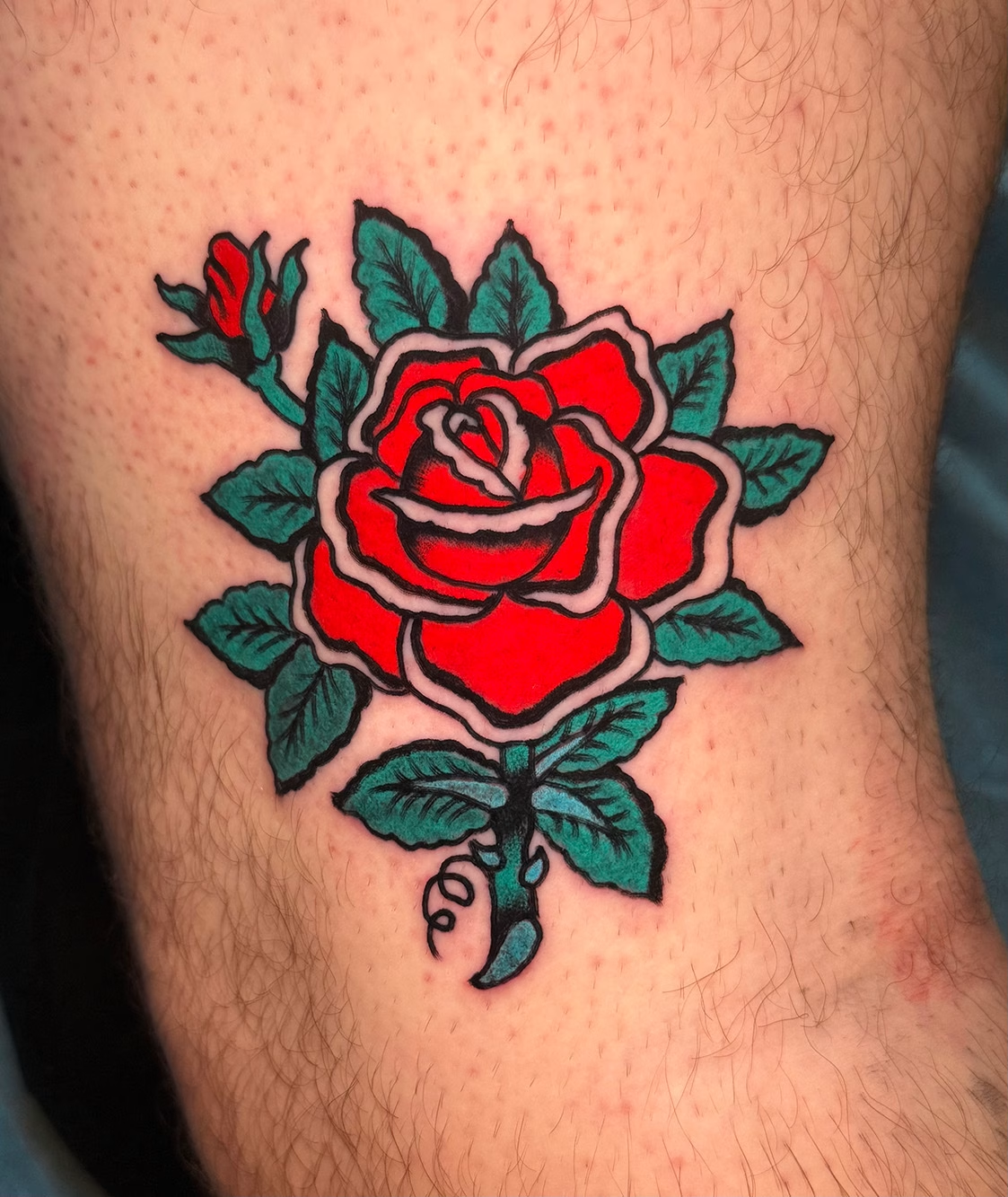
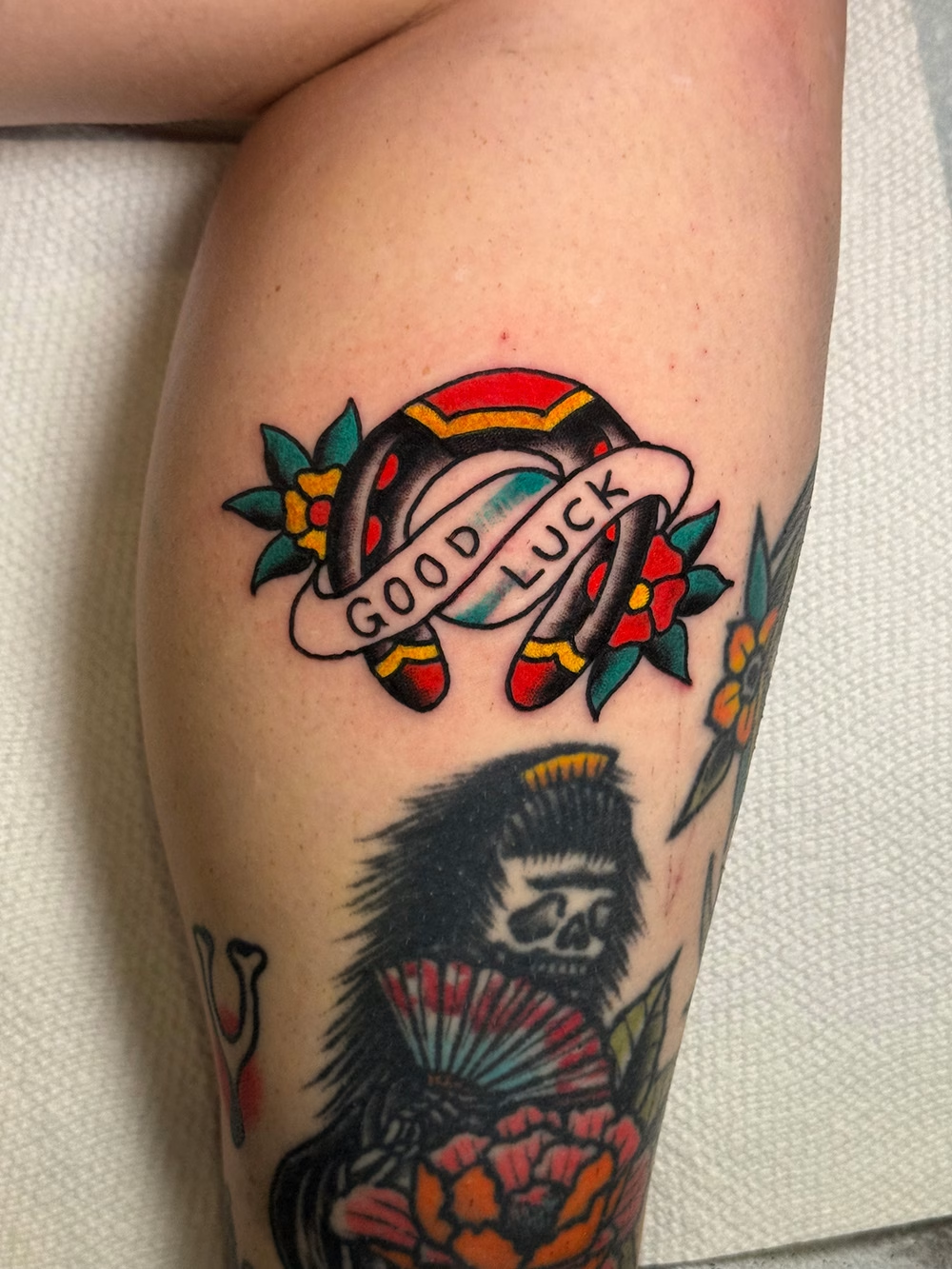
Popular neo traditional subjects include roses, snakes, birds, wolves, tigers, skulls, mythical creatures, and portrait-inspired designs. Many pieces also incorporate ornamental patterns, leaves, jewels, or other decorative details to create a balanced composition.
At Hello Tattoo Parlor, you can explore different concepts based on your interests, preferred imagery, and desired tattoo placement. You might want a bold animal design that represents strength, a floral composition that reflects personal growth, or a symbolic piece inspired by an important experience. Bringing reference images and discussing your ideas helps establish the direction for your artwork.
Neo traditional tattooing offers flexibility in both size and complexity. Smaller designs can focus on a single subject, while larger pieces provide additional space for layered colors, intricate details, and supporting elements.
Why Choose Hello Tattoo Parlor for Neo Traditional Tattoos in Sarasota Florida?
Choosing a tattoo shop is an important step when planning a detailed tattoo. Neo traditional artwork combines several visual elements, including linework, shading, color, and composition. Thinking carefully about these elements helps you choose a design that suits your personal style and the area where you want your tattoo.
Creative and Personalized Concepts
Your tattoo can be inspired by an existing design or developed around your own idea. Discussing the meaning behind your preferred subject helps guide the composition. Whether you want a meaningful symbol, a striking animal, or a decorative floral design, the goal is to select artwork that feels personal rather than generic.
Bold Lines and Detailed Shading
Neo traditional tattoos are known for their confident outlines and dimensional shading. These features help separate individual elements and give the artwork a strong visual presence. The balance between bold lines and smaller details is especially important when deciding how large the tattoo should be.
Expressive Colors and Composition
Although neo traditional tattoos often feature rich colors, the style can also be adapted to suit different visual preferences. Carefully chosen shades emphasize the main subject, create contrast, and connect decorative elements. Discussing your preferred colors and overall look helps shape a design that feels cohesive.
The Motifs and What They Mean
The imagery in neo-traditional tattooing is drawn from traditional tattoo vocabulary, but interpreted with more detail and color. Understanding the subjects helps you choose a piece that feels meaningful rather than purely decorative.
Florals. Roses, peonies, lilies, and chrysanthemums are the most common entry point. Roses carry love and beauty; peonies carry honor and prosperity; lilies carry purity and renewal. Florals offer natural opportunities for layered shading and rich color, and they work at almost any scale.
Animals. Lions, wolves, foxes, tigers, snakes, and birds are the classic neo-traditional subjects. Lions carry courage; wolves carry loyalty and family; snakes carry transformation; birds carry freedom. Their features—eyes, fur, feathers—are where the style’s expressive detail shows most clearly.
Portraits. Stylized facial features, expressive color, and decorative backgrounds are the neo-traditional approach to portraiture—closer to an illustrated interpretation than a photographic one. Portraits can represent a person, a character, or an archetype.
Mythical creatures. Dragons, phoenixes, and serpents offer the style’s most dramatic opportunities for elaborate shapes and contrasting palettes. Dragons carry power and protection; phoenixes carry renewal and resurrection.
Skulls and symbolism. Skulls, daggers, hearts, moons, and other symbolic elements are reinterpreted through neo-traditional linework and decorative detail. Skulls carry mortality and remembrance; daggers carry sacrifice or protection; hearts carry love and devotion.
If you are drawn to more than one motif, that is normal. Narrowing the list is exactly what the consultation is for.
4. Composition: Outlines, Color, and Detail Density
Composition is where neo-traditional differs most from adjacent styles. A few principles worth understanding before your consultation:
Outlines carry the structure. The bold outline is what makes a neo-traditional piece readable at a distance and what keeps it legible as it ages. A weak outline cannot be rescued by good color work.
Color is applied in layers. Neo-traditional color is typically built in stages—base tones, mid-tones, highlights—rather than packed in one pass. This is what produces the dimensional look the style is known for, and it is also why color-heavy pieces take more time than traditional pieces at the same scale.
Detail density must match scale. A design with lots of fine shading and small decorative elements needs enough scale to hold that detail over time. A design that looks crisp at one inch will blur at year ten. The artist will tell you when a concept needs to be larger to hold up.
Negative space keeps the piece legible. Open skin between elements is not wasted space—it is what allows the eye to read the composition at a distance and what keeps the piece from blurring as it ages.
Decorative elements are structural, not filler. Ornamental frames, botanical accents, and background patterns in neo-traditional work are chosen to support the main subject, not to fill empty space. That is part of what separates the style from a simple illustration.
5. Placement and Scale: A Body-by-Body Guide
Neo-traditional work is more detail-dense than traditional work, so placement and scale matter more. Here is a working guide.
Forearm or upper arm. The most common placements. The forearm accommodates elongated designs and standalone portraits; the upper arm offers flexibility for pieces that may later connect to a larger composition.
Shoulder and chest. Good for larger designs with multiple elements, including animal portraits and ornamental compositions.
Thigh and calf. The thigh offers space for elaborate designs and sees less sun, which is a genuine aging advantage. The calf works well for vertical compositions but is more sun-exposed.
Back. The largest canvas, and the natural home for complex compositions involving multiple subjects or decorative backgrounds.
Small placements—wrist, ankle, behind the ear, fingers. These are the hardest placements for neo-traditional work. The style’s detail density does not scale down well. If you want a small piece, the artist will typically simplify the design rather than shrink it proportionally.
During a consultation, the artist will sketch placement boundaries directly on the skin or describe them precisely so you can visualize scale before any deposit is taken.
6. How Color Work Ages: The Reality Check
Neo-traditional is often color-forward, and color ages differently than black and grey. This is worth understanding before you commit, because it is the single most common source of regret in this style.
Color settles; it does not disappear. Neo-traditional pieces with rich color will soften over time. Reds may fade toward pink, blues may lift, greens may mellow. This is normal and expected. What matters is whether the underlying outlines and composition still read after the color softens—and that depends on strong outline work and enough negative space in the design.
Sun exposure is the long-term enemy. On the Gulf Coast, sun is unavoidable. A neo-traditional piece on a forearm or shoulder will see far more sun than one on a thigh or back, and sun fades color faster than anything else. Sunscreen after healing is the single most effective thing you can do to protect a neo-traditional piece.
Placement decisions should account for this. If you want a neo-traditional piece that will still look crisp in twenty years, a thigh or back placement will generally age more gracefully than a forearm or calf. That is a real trade-off worth discussing in the consultation.
Ask the artist directly: “How will this look in ten years?” A good artist answers with specifics. A shop that responds with reassurances instead of details is a shop worth walking away from.
7. Session Planning, Pricing, and Timeline
Neo-traditional work is priced hourly for custom design, and the total depends on the design’s density, placement, and how many sessions it takes. A few realistic ranges:
-
Small neo-traditional pieces (a medium floral, a compact animal portrait, a symbolic piece): typically one session of three to five hours.
-
Half-sleeves: typically two to four sessions, spaced four to six weeks apart.
-
Full sleeves: typically four to eight sessions, depending on background and color density.
-
Back pieces and chest panels: a year or more of sessions, spaced four to six weeks apart.
Session spacing is not arbitrary—it lets the skin surface heal before the next layer goes on, and it lets you live with the progress before the next round. The natural rhythm of a neo-traditional project is months, not days.
A deposit secures your appointment and is applied to the final session. If you are planning a large piece, ask the artist for a realistic session count during the consultation, not before.
8. Safety and Hygiene Standards
Hygiene is not a marketing point—it is the baseline. Every session at a serious shop should involve:
-
Single-use needles and single-use ink caps
-
Sterile technique and a clean station for every client
-
Gloves changed between steps
-
Proper disposal of sharps and contaminated materials
-
A clean, well-lit, well-ventilated workspace
If you are considering a larger neo-traditional piece, ask about hygiene practices directly during the consultation. A shop that is happy to explain them is the one you want. A shop that is vague is not.
9. Our Artists and How We Work
Hello Tattoo Parlor’s team—Chase Fenner, Derek Olsen, Jared Allen, and Lane—works across traditional, fine line, and black-and-grey tattooing. Neo-traditional sits at the intersection of all three: the bold linework of traditional, the controlled detail of fine line, and the shading discipline of black-and-grey.
A few things worth knowing about how to choose an artist for this style:
-
Ask to see recent work in the specific subject you want. A neo-traditional animal portrait and a neo-traditional floral piece draw on different skills. Ask for examples of the subject you are considering, not just the style in general.
-
Ask about color experience if your design is color-heavy. Neo-traditional is often color-forward, and color work has its own technical demands—packing, saturation, and healing.
-
Ask how the piece will age. This is the single most useful question for a neo-traditional tattoo. A good artist will tell you honestly how a specific design will look in ten or twenty years, including how the colors will settle.
-
Confirm artist continuity. If your piece will take more than one session, confirm the same artist will handle all of them.
We are a consultation-first shop. We do not rush walk-ins into large pieces. If you want a neo-traditional tattoo, the first appointment is a conversation, not a needle. That approach protects both your skin and the integrity of the design.
We are also honest about scope. If your idea would be better served by a different specialty, or a larger project than your timeline allows, the artist will tell you. That honesty is part of the service, not a sales tactic.
10. Preparation, Healing, and Aftercare
Before a session:
-
Eat a real meal. Color-heavy sessions run long, and low blood sugar is the most common reason clients need to stop early.
-
Hydrate across the day before.
-
Wear clothing that exposes the placement area.
-
Bring references, not just descriptions.
-
Plan a light day after. A long shading session is tiring.
Healing:
Neo-traditional pieces with layered color take two to three weeks of surface healing, with full settling over a longer window. Keep the area clean, avoid picking or scratching, and protect it from direct sun while it heals. No swimming during healing—no pools, no Gulf, no bay. Sun exposure during healing fades color faster than almost anything else.
After healing:
Sunscreen on exposed placements is the single most effective long-term preservation step, especially for color work. Sun softens color faster than anything else, and a Gulf Coast client who spends time outdoors should treat this as non-negotiable.
Your artist will give you specific instructions based on the design and your skin, and those instructions should take priority over generic advice you find online—including this page.
11. Frequently Asked Questions
What makes neo-traditional different from traditional tattoos?
Neo-traditional keeps the bold outlines and recognizable imagery of American Traditional but adds layered shading, a wider color palette, and more elaborate composition and decorative detail. Traditional work is simpler and more graphic; neo-traditional is more detailed and more illustrative.
Are neo-traditional tattoos always colorful?
No. Many neo-traditional designs use rich color, but the style can also be adapted to black and grey. The approach depends on your preference and the subject.
Who at Hello Tattoo Parlor does neo-traditional work?
Chase Fenner, Derek Olsen, Jared Allen, and Lane all work across the technical range this style requires—bold linework, controlled shading, and color. When you book a consultation, the shop matches you with the artist whose work best fits your concept.
How much do neo-traditional tattoos cost?
Pricing depends on size, complexity, placement, and session time. Neo-traditional pieces are typically more time-intensive than traditional pieces at the same scale because of the added shading and detail. Contact the shop for an estimate based on your specific idea.
Are neo-traditional tattoos suitable for a first tattoo?
Yes, if the design and placement fit your preferences. Smaller neo-traditional pieces—a floral on the upper arm, a compact animal portrait on the forearm—work well as first tattoos. Very detailed designs at a small scale are not ideal for a first piece because they blur faster.
Will a neo-traditional piece still look good in twenty years?
A well-planned one will. The key factors are enough scale for the detail, strong underlying outlines, and sun protection after healing. Placement matters too—a thigh or back will generally age more gracefully than a forearm or calf. Ask the artist directly how a specific design will age.
Can I customize a neo-traditional design?
Yes. The whole point of the style is that it interprets familiar imagery through your preferences. Discuss the subject, palette, decorative elements, and composition with your artist, and bring references to communicate your taste.
Where can I get a neo-traditional tattoo in Sarasota?
Hello Tattoo Parlor is at 530 S Orange Ave in downtown Sarasota. Call the shop or use the contact form to book a consultation.
Same Service We Provide In Your Nearby Area
Explore neo traditional tattoo services in nearby communities to find a convenient location for your next tattoo.
Other Services We Provide
Explore additional tattoo services from Hello Tattoo Parlor to find a style that suits your preferences.
Come See What Hello Tattoo Parlor Feels Like.
The best way to understand the parlor is to step inside. Come meet us, see the work, and start a conversation about what you want to create.