Small Tattoos in Sarasota Florida
Small tattoos in Sarasota Florida are a popular choice for anyone who wants meaningful artwork with a simple, subtle, and stylish appearance. At Hello Tattoo Parlor, small tattoo designs offer a creative way to express your personality through delicate symbols, minimalist illustrations, tiny lettering, and meaningful imagery. Whether you are getting your first tattoo or adding another piece to your collection, a small design helps you express an idea without committing to a large tattoo.
Explore Small Tattoo Designs in Sarasota Florida
Small tattoos can be simple, elegant, playful, or deeply personal. Their compact size makes them suitable for people who prefer understated artwork that complements their individual style. Popular options include hearts, stars, flowers, butterflies, moons, initials, dates, and small animal illustrations.
Some people choose small tattoos to represent an important memory, a personal milestone, or someone special. Others prefer a design simply because they appreciate its appearance. Minimalist symbols and geometric shapes offer a clean look, while tiny floral designs and delicate linework create a softer aesthetic.
At Hello Tattoo Parlor, you can explore different concepts based on your interests and preferred style. You might bring a reference image, choose an existing design, or discuss an idea you would like to turn into a tattoo. Considering the design’s size, detail, and placement helps you select artwork that suits your preferences.
Although small tattoos use less space, their design still requires careful planning. Fine details may need to be simplified to remain clear as the tattoo ages. Choosing a suitable size for the artwork helps maintain its overall appearance over time.
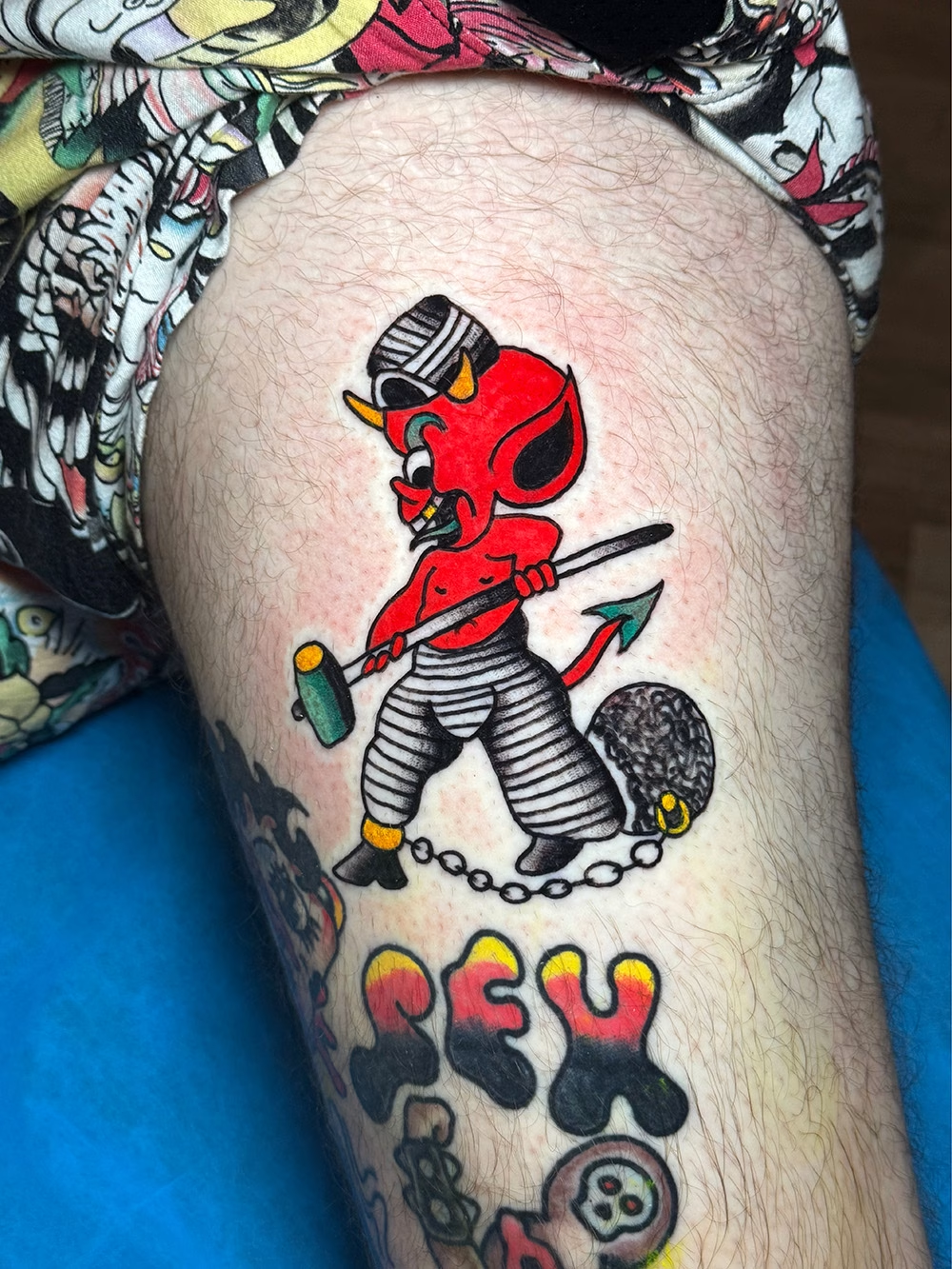
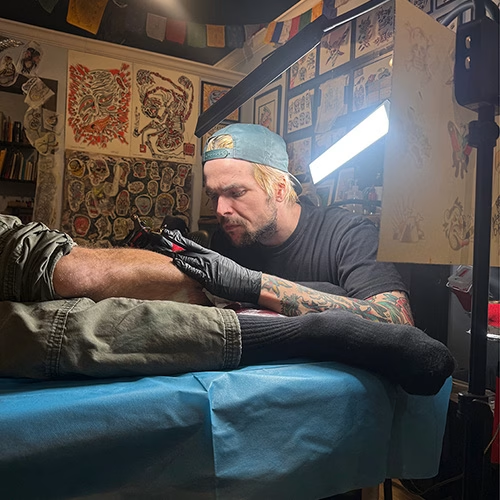
Why Choose Hello Tattoo Parlor for Small Tattoos in Sarasota Florida?
Choosing a tattoo shop involves finding a design that matches your vision and understanding how it will look on your skin. Small tattoos offer plenty of creative possibilities, but the right design depends on your preferences, placement, and desired level of detail.
Personalized Small Tattoo Ideas
A small tattoo can carry a special meaning without requiring a complicated design. You may choose a symbol connected to your interests, a date that marks an important occasion, or a simple illustration that represents a personal value. Discussing your idea helps you explore options that feel relevant to your life.
Minimalist and Detailed Designs
Minimalist tattoos often feature clean lines and simple shapes, while other small designs use delicate shading or compact illustrations. Flowers, tiny animals, geometric symbols, and lettering can all work well when the details are planned appropriately for the available space.
Placement That Suits Your Style
Small tattoos can be placed on various areas of the body, depending on the design and your preferences. The forearm, upper arm, shoulder, and ankle may suit different concepts. Your tattoo artist can help you consider how the design will fit the selected area and whether its details require additional space.
The Aging Reality: Why Small Tattoos Blur
Ink spreads slightly under the skin over time. This is not a defect—it is how tattoos age—but it affects small tattoos more than large ones because there is less design to absorb the spread.
Fine line work fades fastest. Thin lines and tiny details blur first. A tattoo that looks crisp at one inch will look soft and indistinct at year five if the lines are too thin.
Contrast has less room to spare. A small tattoo has less contrast built in than a large one, so when the ink softens, the piece has less visual structure to fall back on.
Sun exposure hits small tattoos hardest. Small tattoos have less ink to absorb sun damage, so a small piece on a sun-exposed placement fades noticeably faster than a large one. On the Gulf Coast, this is a real consideration for anyone who spends time outdoors.
Scale determines survival. A design that needs more detail than the available area allows will blur. The fix is not to shrink the design—it is to simplify the design or increase the size.
The single most useful question you can ask an artist is: “How will this look in five years?” A good small-tattoo artist answers with specifics, including what they will do to build in enough line weight and enough negative space to survive.
4. Line Weight: The Single Most Important Variable
Line weight is the thickness of the lines in the design, and for small tattoos it is the whole game.
A line that is too thin will blur. Fine single-needle linework looks beautiful fresh and fades fastest. This is why fine-line small tattoos are the most common source of regret in the category.
A line that is too thick will overwhelm the design. Heavy lines on a small piece can make the design feel clumsy, and can reduce the amount of internal detail that fits.
Line weight has to be deliberate, not approximate. This is what separates an artist who is genuinely skilled at small work from one who is willing to do it. Consistent line weight is the most reliable tell in a portfolio.
When you evaluate a small-tattoo artist, look at the line weight in healed photos. Are the lines consistent, or do they thicken and thin unpredictably? Inconsistent line weight is the most common sign of an artist who is still developing precision at small scale.
5. Lettering: The Highest-Risk Small-Tattoo Choice
Small lettering is the single most common source of tattoo regret, and it deserves its own section.
Letters close together merge into a blob. Small script tattoos—especially names, dates, and short words—blur faster than any other type because the space between letters is the first thing to close up as the ink spreads.
There is a minimum legible size for every font. Simple script has a minimum legible height of roughly a quarter inch. Fonts with flourishes, thin strokes, or tight spacing need to be larger. This is not a matter of artistic preference—it is a physical limit of how ink behaves in skin.
Bolder fonts and larger sizes age better. This is the single most useful piece of advice for anyone considering lettering. A bolder font at a slightly larger size will still be legible at year ten; a delicate script at a smaller size will not.
A symbol is often the better choice. If the meaning behind the lettering is what matters—a name, a date, a memory—a symbol that carries the same meaning will often age far better than the lettering itself.
If you want lettering, ask the artist specifically about lettering experience and ask to see healed lettering examples. Not every artist who is good at small tattoos is good at lettering, and lettering is the highest-risk category within the category.
6. Small Is a Range: The Four Categories
“Small tattoo” covers four very different project types, and each has its own aging profile.
Minimalist symbols and single-line designs. These work well at small scale because they have little detail to lose. A single-line geometric shape, a simple heart, a minimalist moon—these are among the safest small tattoo choices.
Tiny florals and botanical designs. These work if the design is simplified appropriately. A single peony or a small rose at one to two inches can hold up if the artist uses enough line weight and leaves enough negative space. A detailed bouquet at the same size will not.
Small lettering. The riskiest category, for the reasons above.
Small animals and illustrations. These can work at two to three inches if the design is simplified. A small silhouette or a single-feature animal design ages better than a detailed mini-portrait.
Matching tattoos. Popular for friends and family, and usually simple by design, which makes them a good fit for small scale—provided everyone involved understands the aging reality.
Before you commit, think about what you want the tattoo to represent and how much detail you actually need. A simple design can be just as meaningful as an elaborate one, and it will age better.
7. Placement: Why Some Spots Age Badly
Small tattoo placement is more consequential than large tattoo placement because there is less design to absorb the aging effects. Here is an honest guide.
Forearm and upper arm. The safest small tattoo placements. These areas see relatively little friction, have stable skin, and hold detail well over time.
Shoulder and collarbone. Also good, though collarbone tattoos see more sun than upper arm placements.
Thigh and calf. Good for small pieces, with the thigh being the most forgiving for aging because it sees little sun and little friction.
Ankle. Moderate risk. Ankle tattoos see more friction from shoes and socks, and the skin is thinner.
Wrist. Moderate risk. Wrist tattoos are popular for small designs but see more friction and sun than forearm placements.
Fingers. High risk. Finger tattoos blur faster than almost any other placement because the skin regenerates quickly and sees constant friction.
Behind the ear. High risk for the same reasons as fingers—thin skin, constant friction from hair and glasses, and sun exposure.
Ribs and inner arm. Moderate to high risk for pain, not for aging. These areas are more sensitive during the session.
During a consultation, the artist will sketch placement boundaries directly on the skin or describe them precisely so you can visualize scale before any deposit is taken.
8. The First-Tattoo Audience
Small tattoos are the most common first tattoo, and that creates a specific set of concerns that deserve direct answers.
Pain. Small tattoos are generally less painful than large ones because they take less time, but pain depends more on placement than on size. Ribs, fingers, ankles, and the inner arm are more sensitive than the outer forearm or upper arm.
Healing. Small tattoos heal in the same two-to-three-week window as larger ones, but they are easier to care for because the area is smaller.
Permanence. A small tattoo is just as permanent as a large one. This is worth saying directly because the lower cost and shorter session can create a false sense of impermanence. If you are not sure, wait.
Choosing for the right reasons. A small tattoo should be something you genuinely like, not something you chose because it was small or because it is a current trend. Trend-driven small tattoos are the second most common source of regret after lettering.
Whether a small tattoo is a good entry point. Yes—if the design and placement fit your preferences. A minimalist symbol on the upper arm or a compact floral on the forearm is a genuinely good first tattoo. Fine lettering is a harder first piece because the aging risk is higher.
9. How to Evaluate an Artist Who Is Good at Small Work
Small tattoos are often treated as entry-level work, but a well-executed small tattoo demands more precision than a large one. A few practical ways to evaluate whether an artist is genuinely good at small work:
-
Look at healed small work, not just fresh. Fresh small tattoos always look crisp. Healed small tattoos are what you are actually buying. Ask for healed photos—ideally healed for at least a year—of work at the scale you are considering.
-
Look at the line weight. Consistent line weight is the most reliable tell of precision at small scale.
-
Look at lettering specifically if you want lettering. Ask to see healed lettering examples.
-
Ask how the artist plans for aging. A small-tattoo artist who can talk specifically about how a design will look in five years—and what they will do to make sure it holds up—is an artist worth booking.
-
Ask about simplification. A good small-tattoo artist will often suggest simplifying a design rather than compressing it. That instinct is a sign of competence.
At Hello Tattoo Parlor, our artists work across the technical range small tattoos draw on—bold linework, controlled fine detail, and deliberate shading. When you book a small-tattoo consultation, the shop will match you with the artist whose work best fits your specific idea—and will tell you honestly if your design needs to be simplified or made larger to hold up.
10. Session Planning, Pricing, and Timeline
Small-tattoo work is priced hourly for custom design, and the total depends on the design’s complexity and the session time.
-
Minimalist symbols and simple line designs: typically one session of thirty to sixty minutes.
-
Small florals, small animals, and small symbolic compositions: typically one session of one to two hours.
-
Small lettering with careful placement: typically one session of one to two hours, sometimes longer if the lettering requires careful planning.
-
Matching tattoos for two or more people: typically one session per person, often scheduled back-to-back in a single visit.
Most small tattoos are completed in a single appointment, which is what makes them accessible. A deposit secures your appointment and is applied to the final session.
11. Safety and Hygiene Standards
Hygiene is not a marketing point—it is the baseline. Every session at a serious shop should involve:
-
Single-use needles and single-use ink caps
-
Sterile technique and a clean station for every client
-
Gloves changed between steps
-
Proper disposal of sharps and contaminated materials
-
A clean, well-lit, well-ventilated workspace
Small tattoos are sometimes treated as lower-stakes, but the hygiene standards are identical to larger work. Ask about hygiene practices directly during the consultation. A shop that is happy to explain them is the one you want. A shop that is vague is not.
12. Our Artists and How We Work
Hello Tattoo Parlor’s team—Chase Fenner, Derek Olsen, Jared Allen, and Lane—works across traditional, fine line, and black-and-grey tattooing. Small tattoos draw most heavily on the fine-line discipline: precise line weight, careful composition within limited space, and restraint about detail density.
A few things worth knowing about how to choose an artist for small work:
-
Ask to see healed small tattoos specifically. Fresh small tattoos always look crisp. Healed small tattoos are what you are buying.
-
Ask about the specific thing you want. A minimalist geometric symbol, a tiny floral, and fine lettering draw on different skills. Ask for examples of the subject you are considering, not just small tattoos in general.
-
Ask how the piece will age. This is the single most useful question for a small tattoo. A good artist will tell you honestly whether your idea will hold up at the size you want, and what they would change to make it survive.
-
Ask about placement risks. Some placements—fingers, ankles, behind the ear, ribs—are more prone to blurring or fading. An honest artist will flag this before you commit.
We are a consultation-first shop. We do not rush walk-ins into designs that will not age well. If a small-tattoo idea needs to be simplified or made larger to survive, the artist will tell you. That honesty is part of the service, not a sales tactic.
13. Preparation, Healing, and Aftercare
Before a session:
-
Eat a real meal. Even short sessions go better with food in your system.
-
Hydrate across the day before.
-
Wear clothing that exposes the placement area.
-
Bring references, not just descriptions—especially for lettering.
-
Plan a light day after. A one-to-two-hour session is not exhausting, but healing is easier when you are not immediately back at a physically demanding job.
Healing:
Small tattoos heal in the same two-to-three-week window as larger ones. Keep the area clean, avoid picking or scratching, and protect it from direct sun while it heals. No swimming during healing—no pools, no Gulf, no bay. Sun exposure during healing is the most common way a small tattoo loses crispness.
After healing:
Sunscreen on exposed placements is the single most effective long-term preservation step—and it matters more for small tattoos than for large ones, because small tattoos have less ink to absorb sun damage. A Gulf Coast client who spends time outdoors should treat this as non-negotiable.
Your artist will give you specific instructions based on the design and your skin, and those instructions should take priority over generic advice you find online—including this page.
14. Frequently Asked Questions
What counts as a “small tattoo”?
Generally, a small tattoo is one that fits within roughly two to four inches at its longest dimension and is completed in a single session of one to two hours. But “small” is a range, not a category—a minimalist single-line symbol and a compact floral composition are both small, and they are very different projects.
Will my small tattoo blur over time?
Some will, and some will not. Fine line work, tiny lettering, and very detailed designs blur faster than minimalist symbols and simple florals. The single best thing you can do is ask the artist honestly how your specific idea will age, and be willing to simplify the design or increase the size if they recommend it.
Why is lettering the highest-risk small-tattoo choice?
Because letters close together merge into a blob as the ink spreads over time. Small script tattoos—especially names, dates, and short words—are the most common source of regret in tattooing. The fix is usually a bolder font and a larger size, or a symbol instead of lettering.
Which artist should I book for a small tattoo?
Chase Fenner, Derek Olsen, Jared Allen, and Lane all work across the technical range small tattoos draw on, particularly fine-line work. The shop will match you with the artist whose portfolio best fits your specific design when you book.
What placements are best for a small tattoo?
The safest aging placements are the forearm, upper arm, and thigh. The riskiest are fingers, behind the ear, and ankles, which see more friction and blur faster.
How much do small tattoos cost?
Pricing depends on size, complexity, and session time. Most small tattoos are completed in one session of one to two hours. Contact the shop for an estimate based on your specific idea.
Are small tattoos suitable for a first tattoo?
Yes, if the design and placement fit your preferences. Minimalist symbols and compact florals work well as first tattoos. Fine lettering is a harder first piece because the aging risk is higher.
Can I get a small tattoo in a single visit as a visitor?
Yes. Small tattoos are the most visitor-friendly category in tattooing—a minimalist symbol, a small line floral, or a short script piece at a legible size can usually be completed in a single one-to-two-hour session. Book the consultation for the first or second day of your trip.
Can I get matching small tattoos with a friend or family member?
Yes. Matching small tattoos are common, and a shared design works well at small scale if it is simple enough. Schedule the appointment so everyone involved can be seen back-to-back in a single visit.
How do I know if a small tattoo artist is good?
Look at healed work, not just fresh work. Look at line weight consistency. Ask to see healed lettering if you want lettering. And ask the artist how they plan for a small design to age.
Where can I get a small tattoo in Sarasota?
Hello Tattoo Parlor is at 530 S Orange Ave in downtown Sarasota. Call the shop or use the contact form to book a consultation.
Same Service We Provide In Your Nearby Area
Explore small tattoo services in nearby communities to find a convenient location for your next tattoo.
Other Services We Provide
Explore additional tattoo services from Hello Tattoo Parlor to find a style that suits your preferences.
Come See What Hello Tattoo Parlor Feels Like.
The best way to understand the parlor is to step inside. Come meet us, see the work, and start a conversation about what you want to create.